
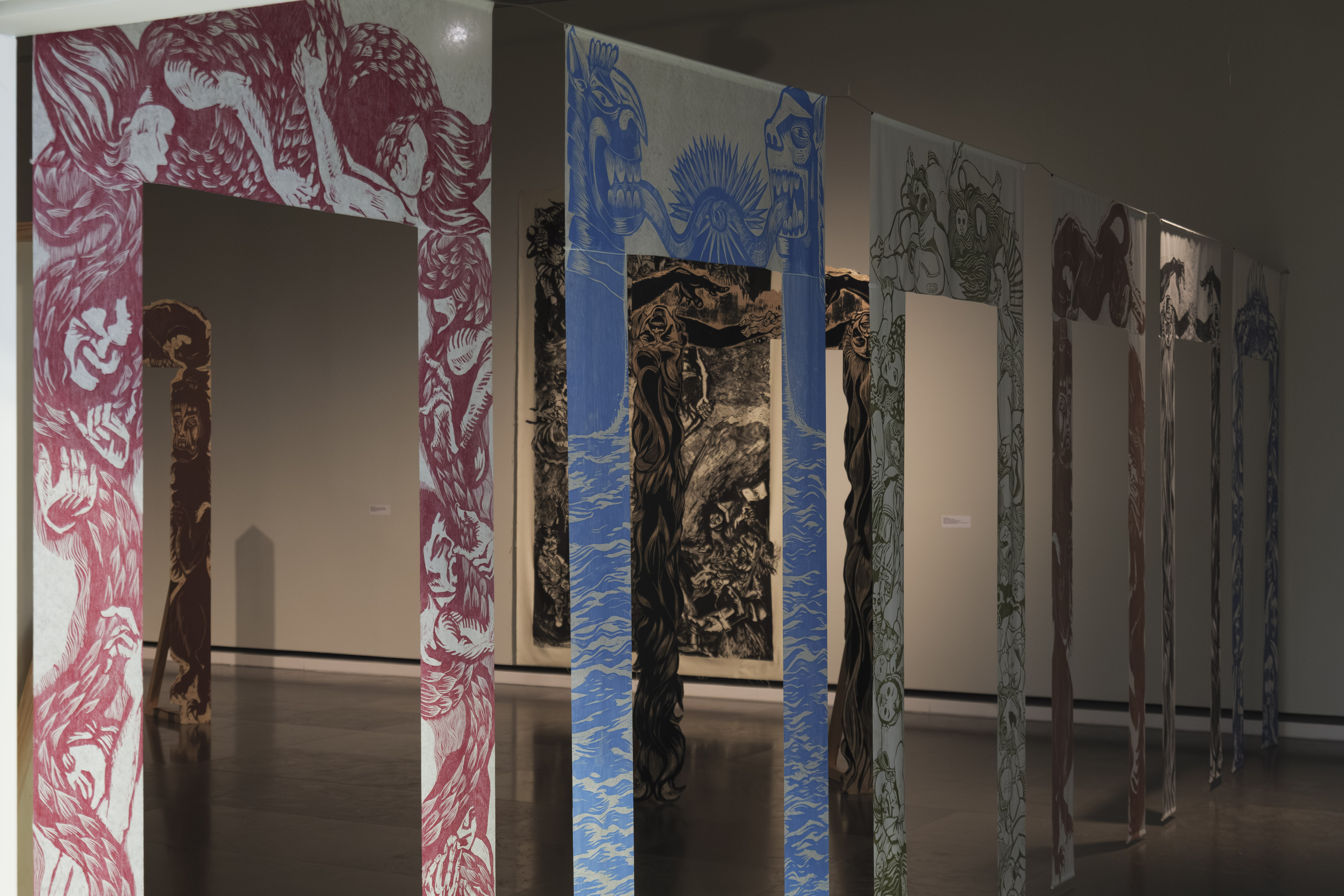
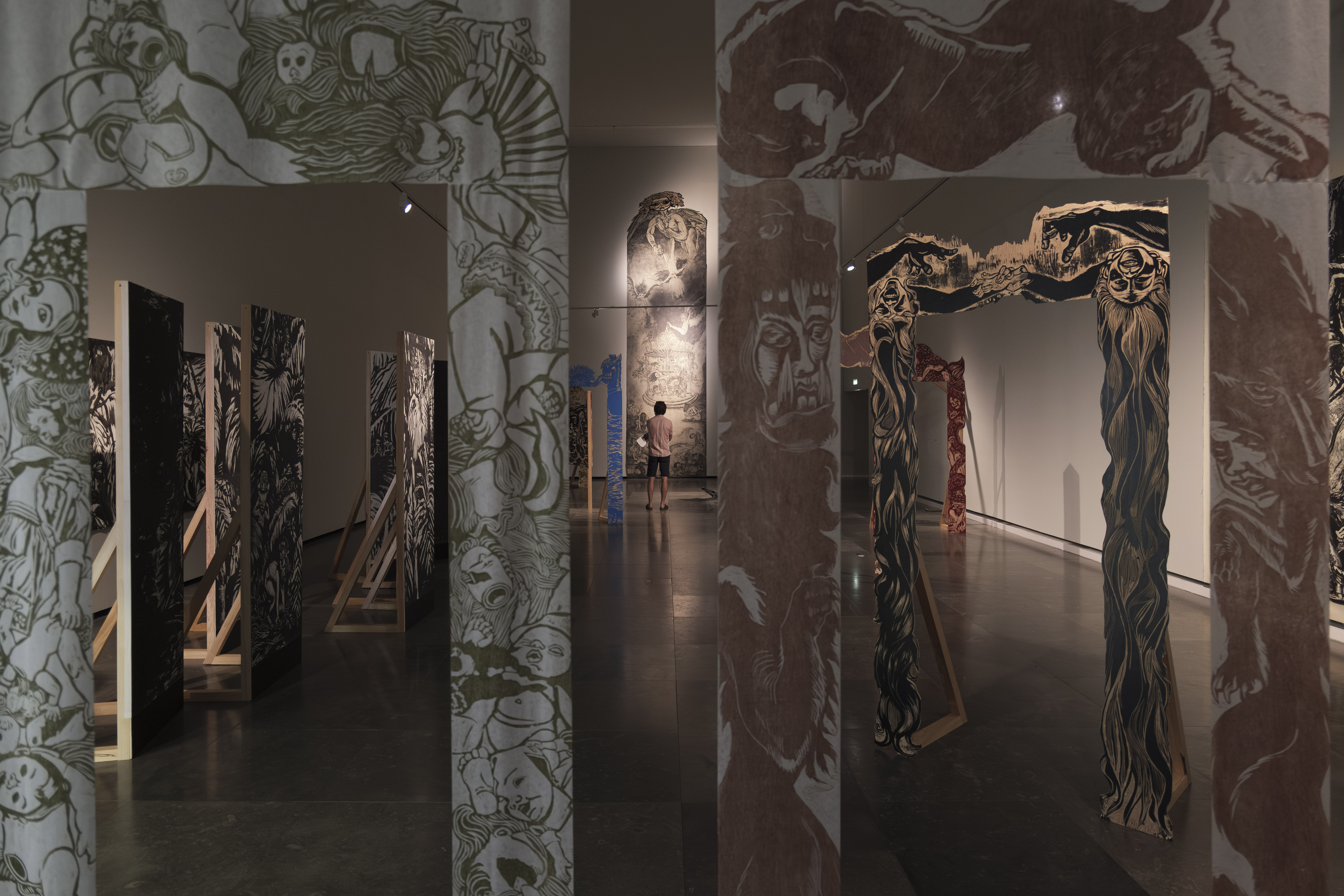
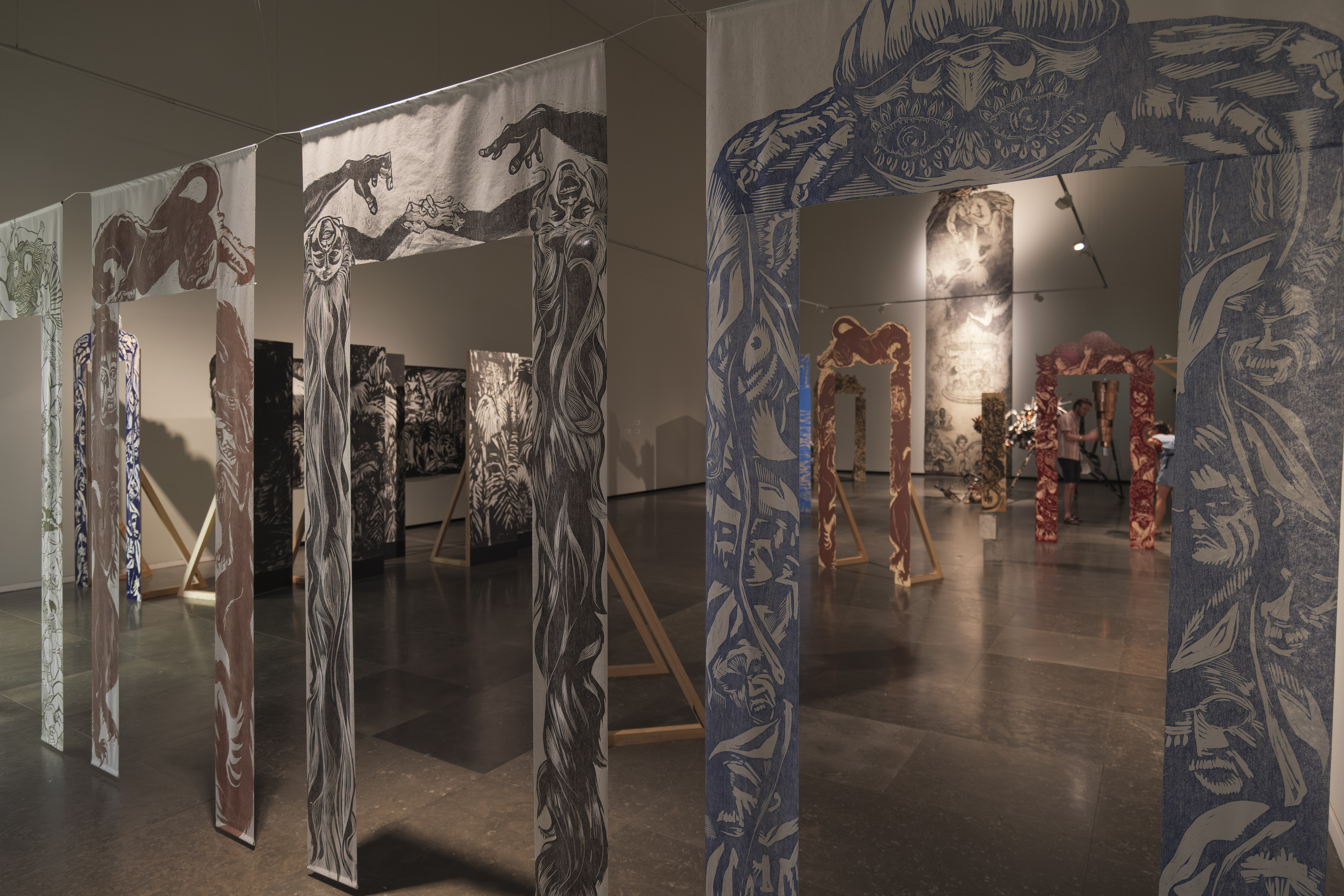
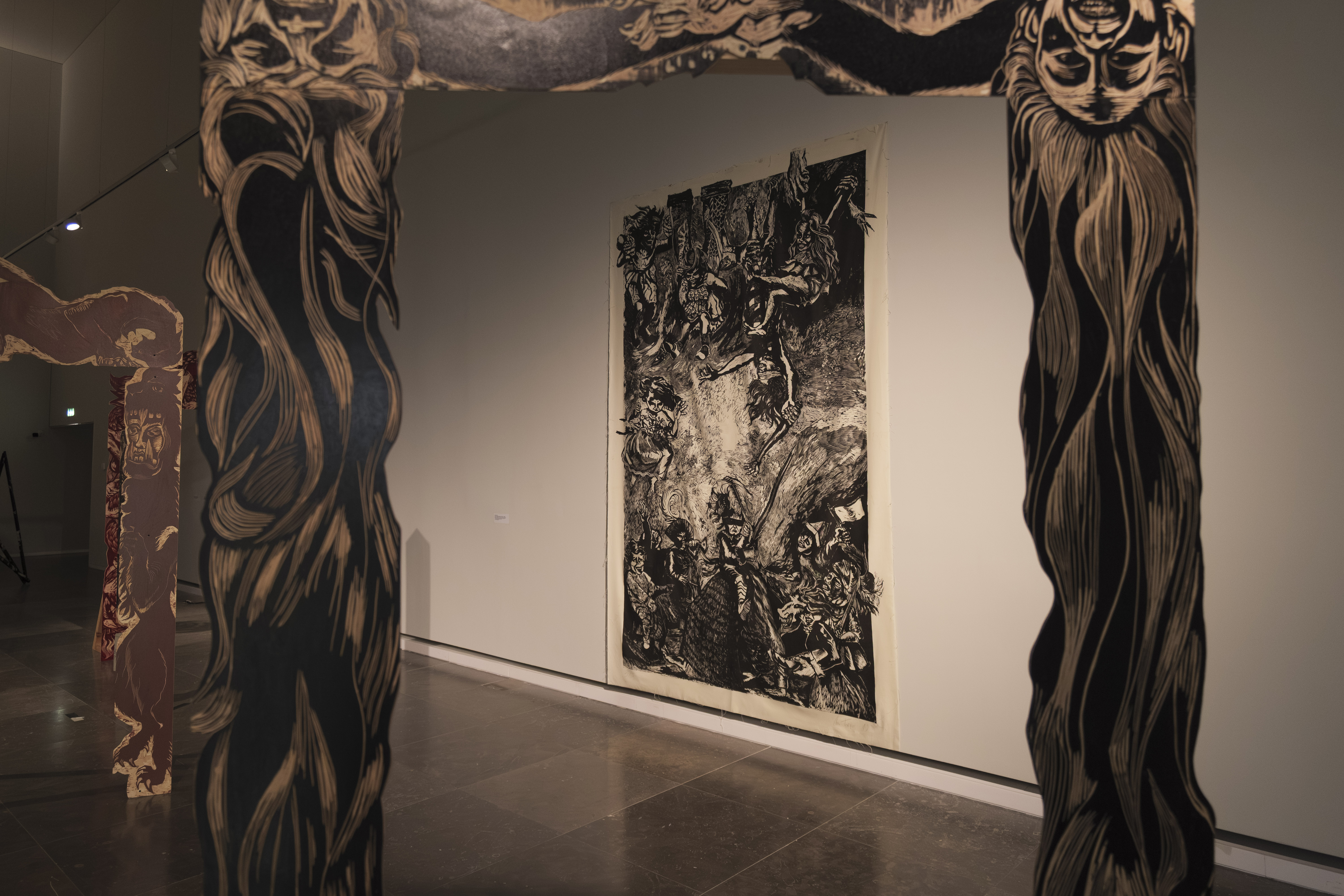
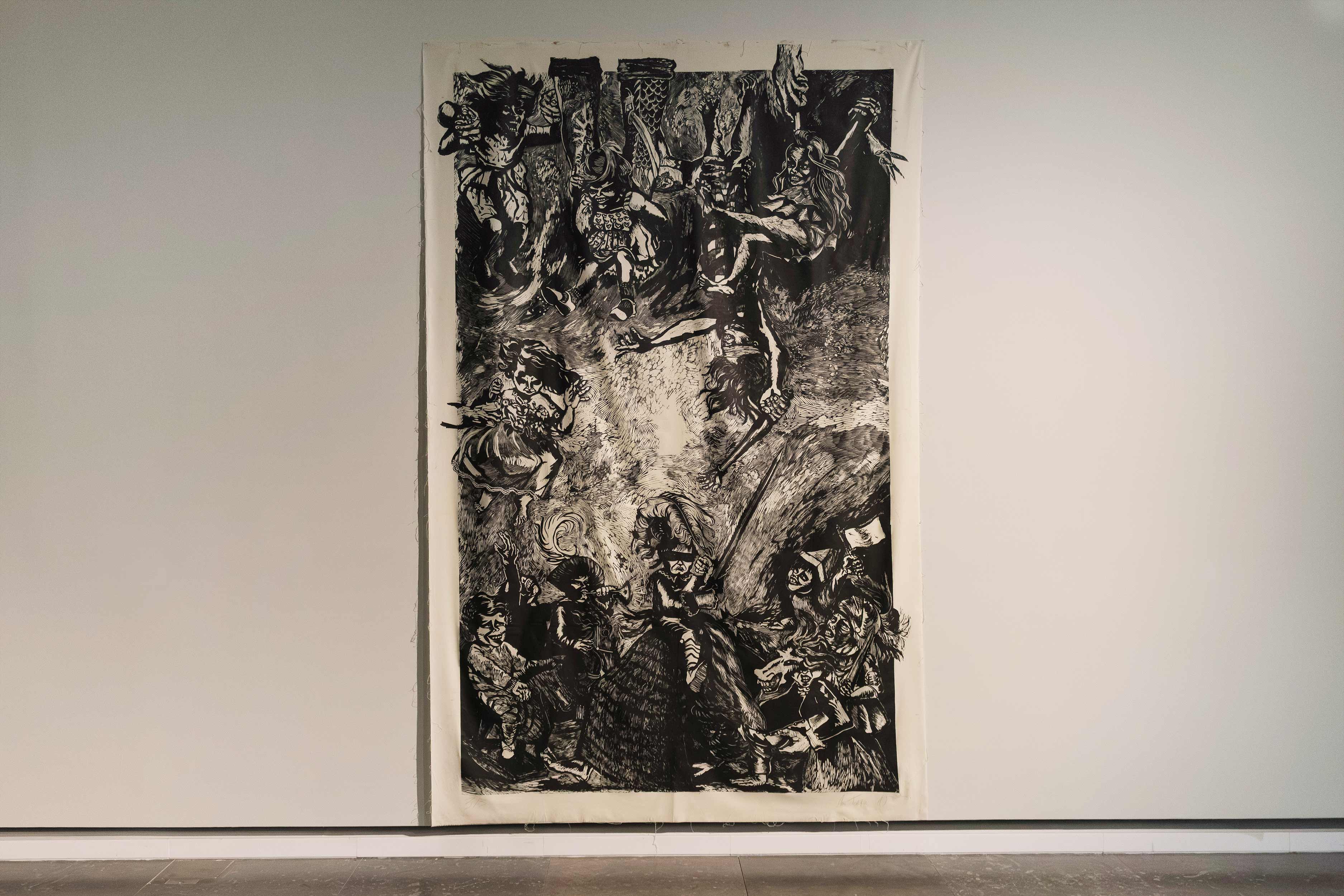
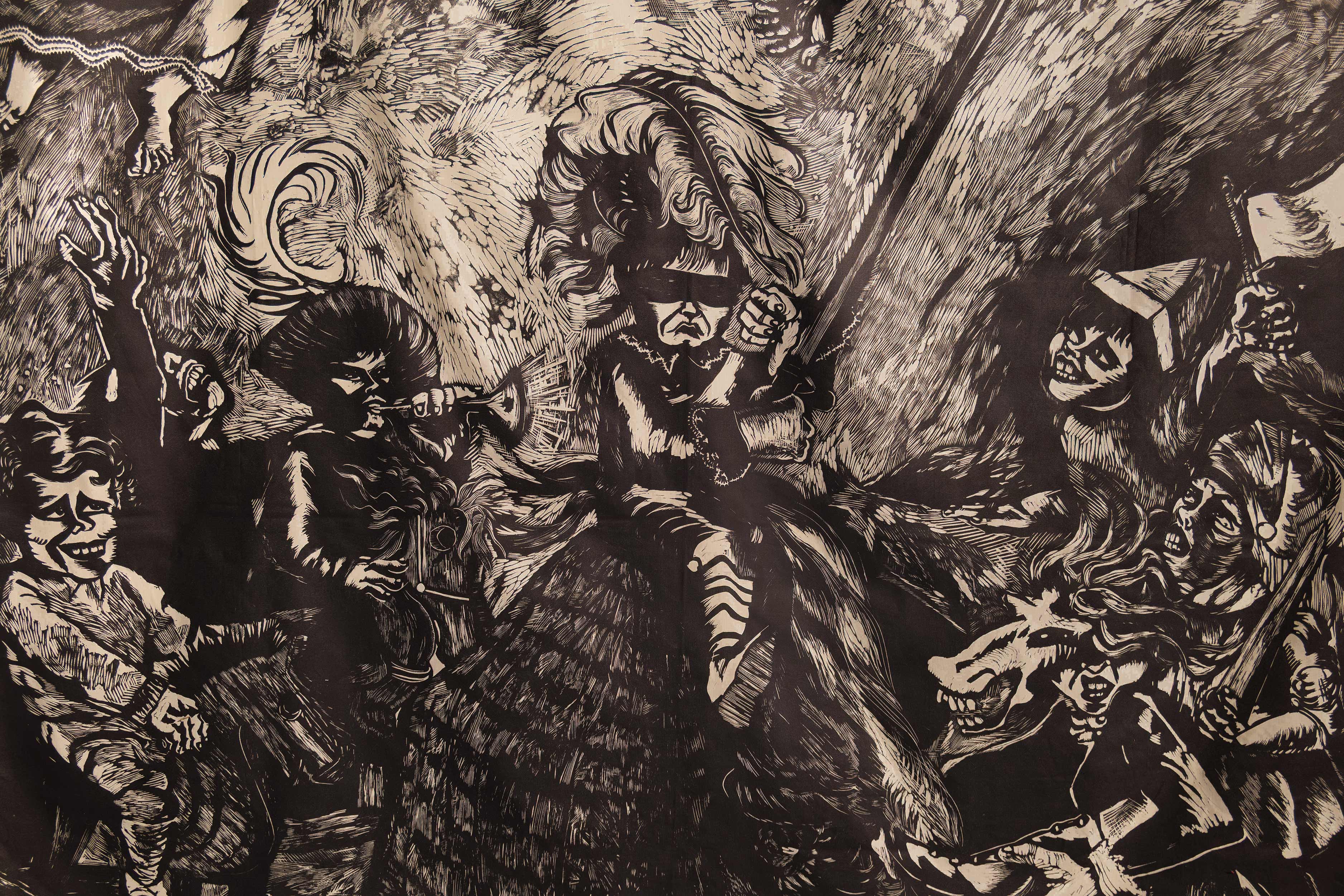
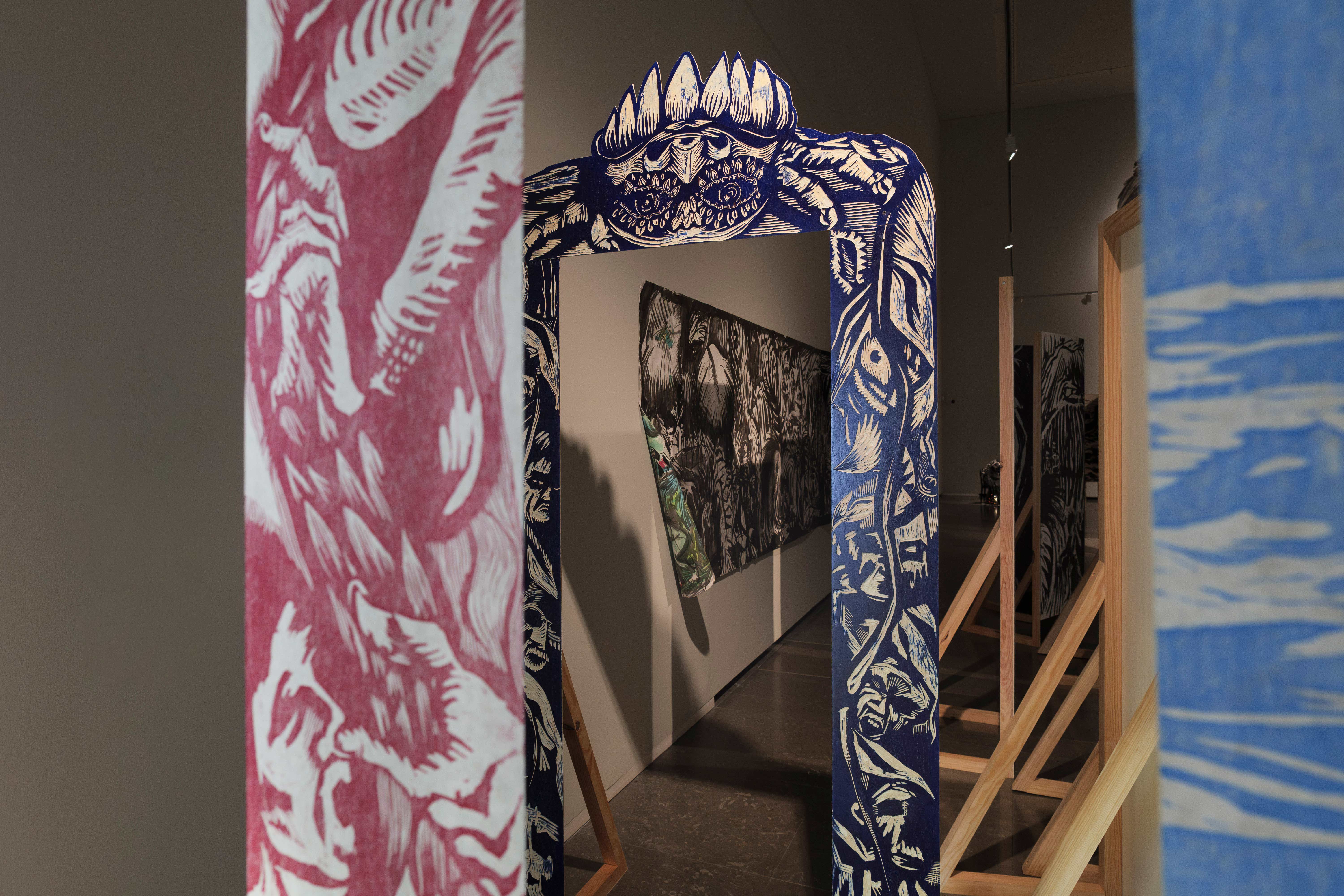
"portals"
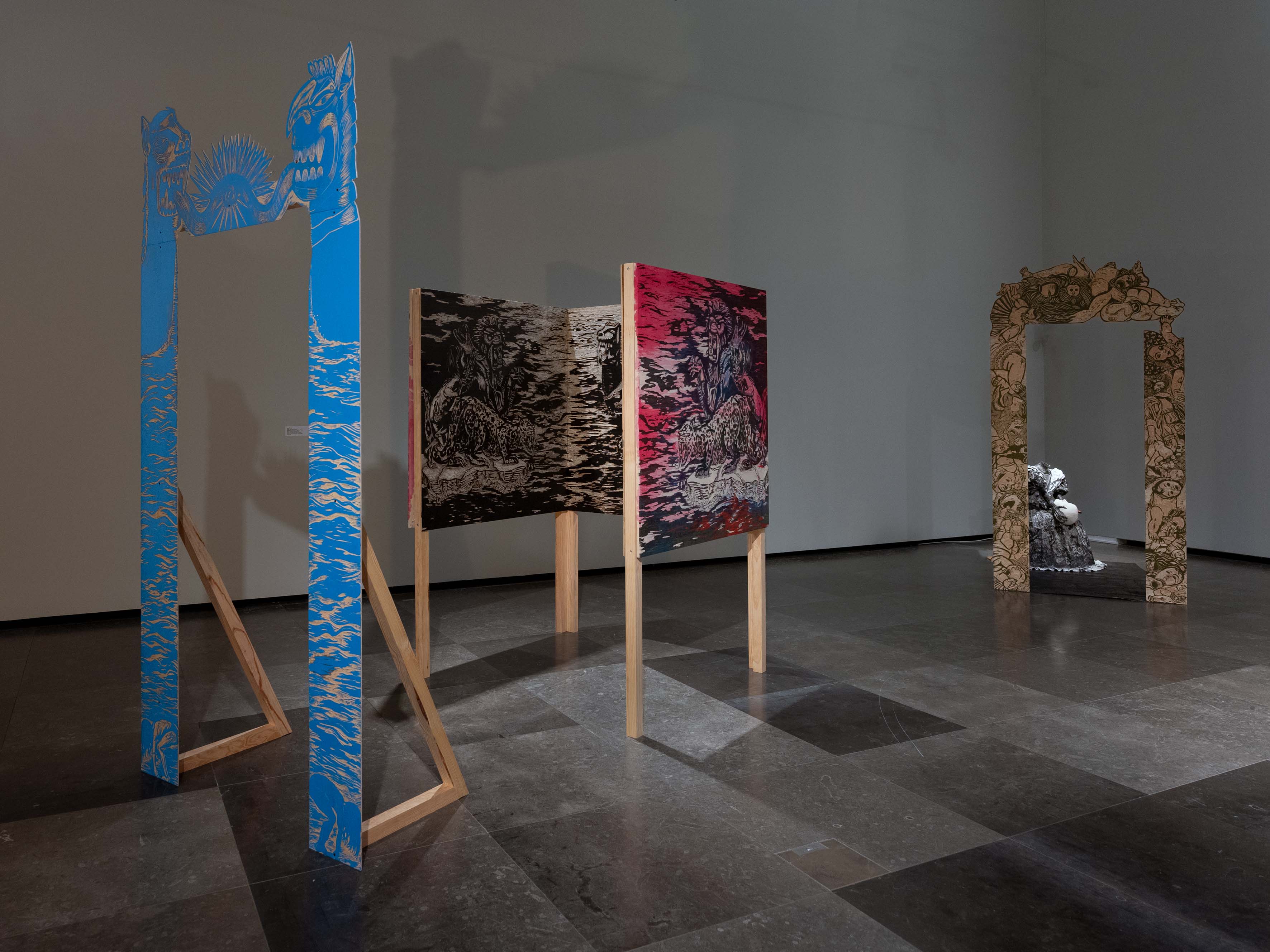
installation; colour woodcut print on interfacing250cm x 122,5cm (Un.)
casa das histórias paula rego | cascais 2025
photo by ricardo pesqueira
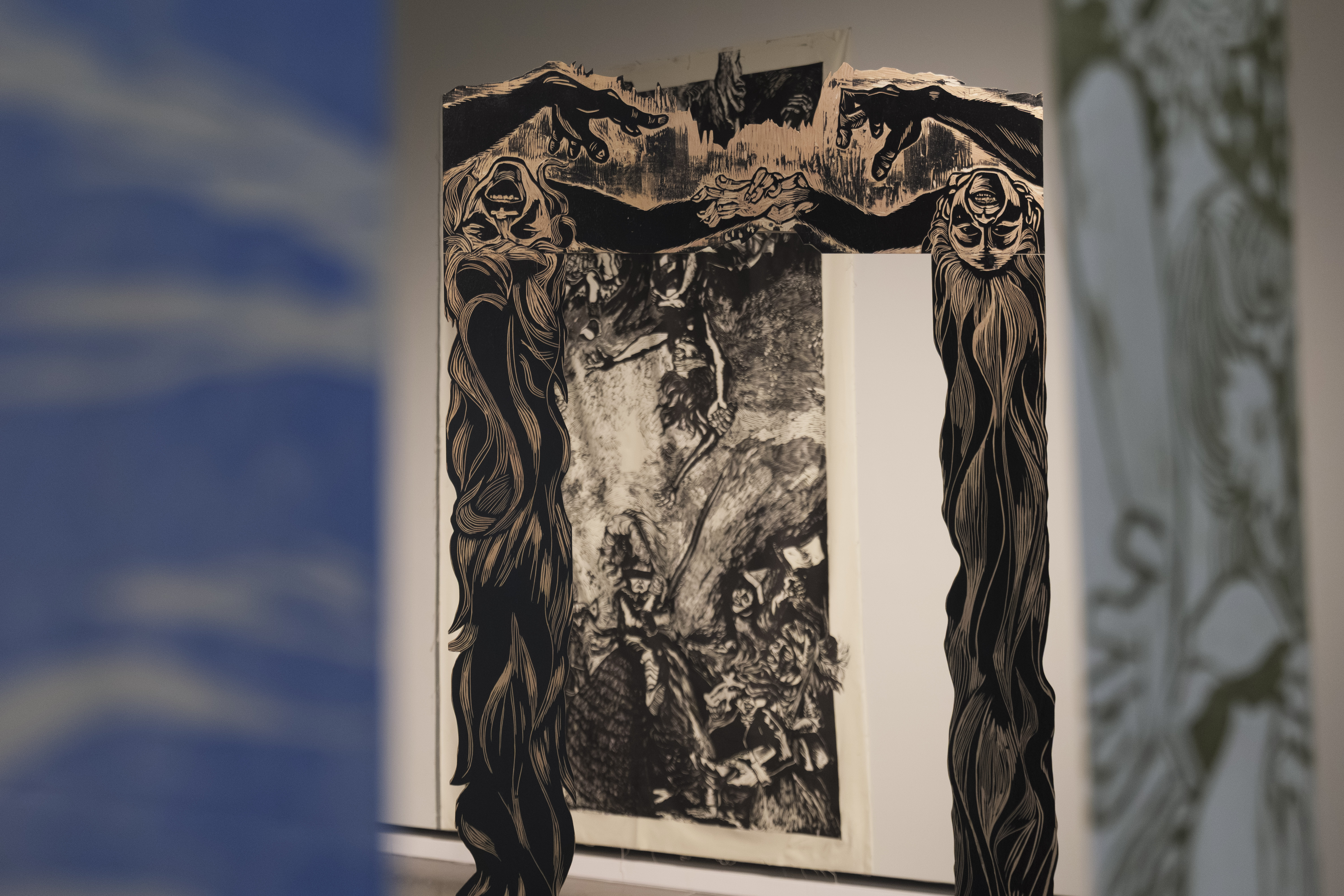
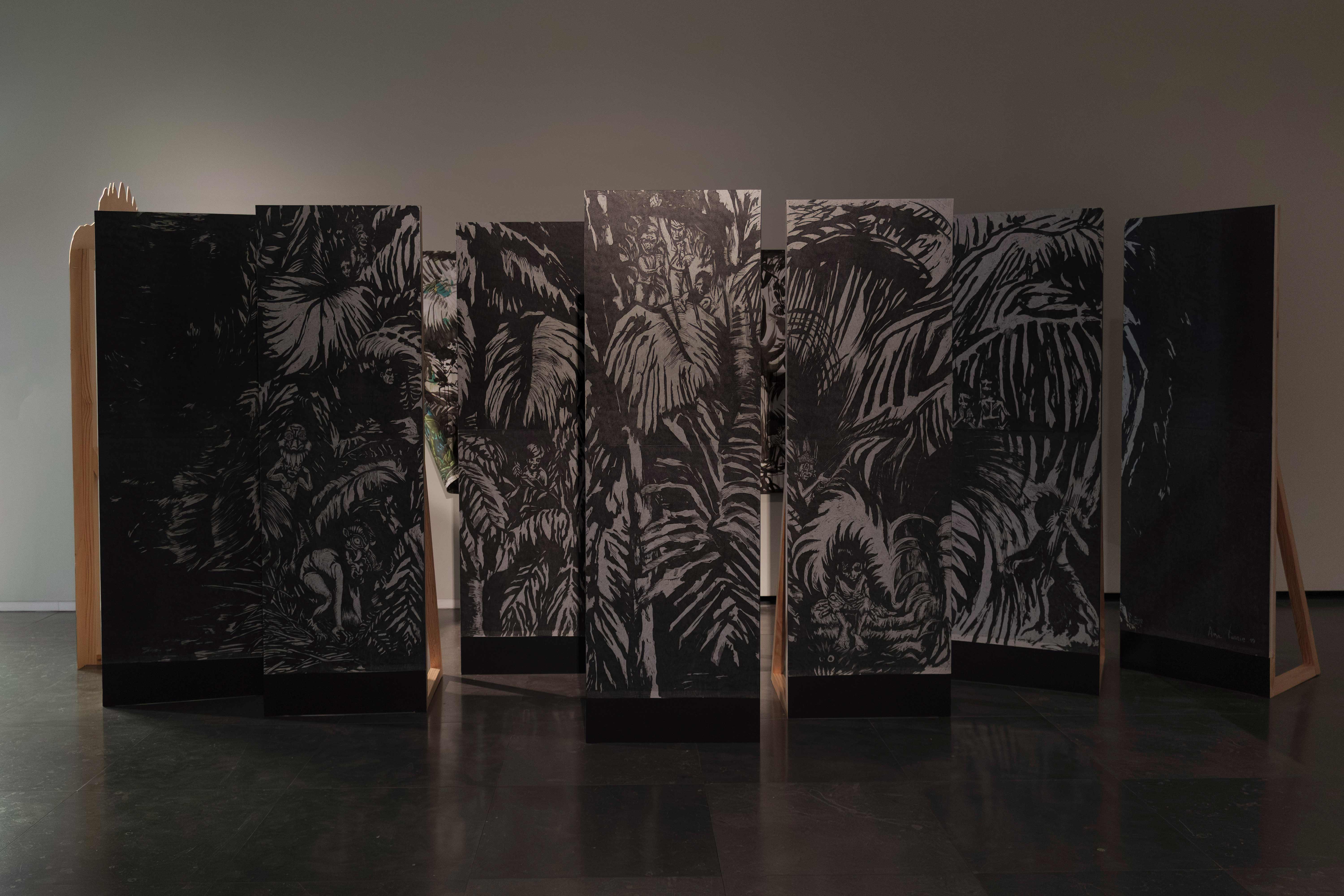
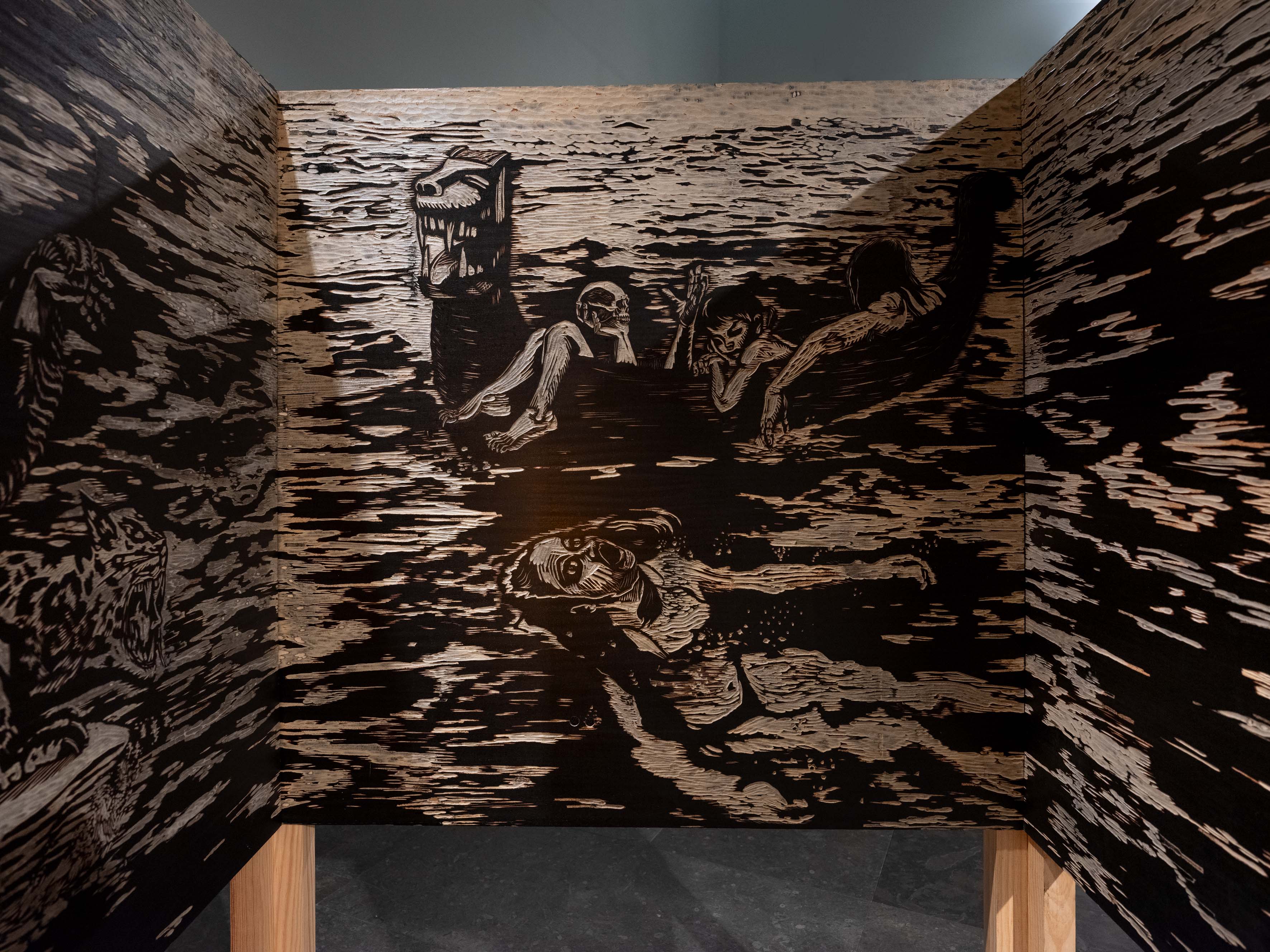
"abyss"
instalation linocut on fabric, woodcut matrizes250cm x 122,5cm
casa das histórias paula rego | cascais 2025
photo by ricardo pesqueira
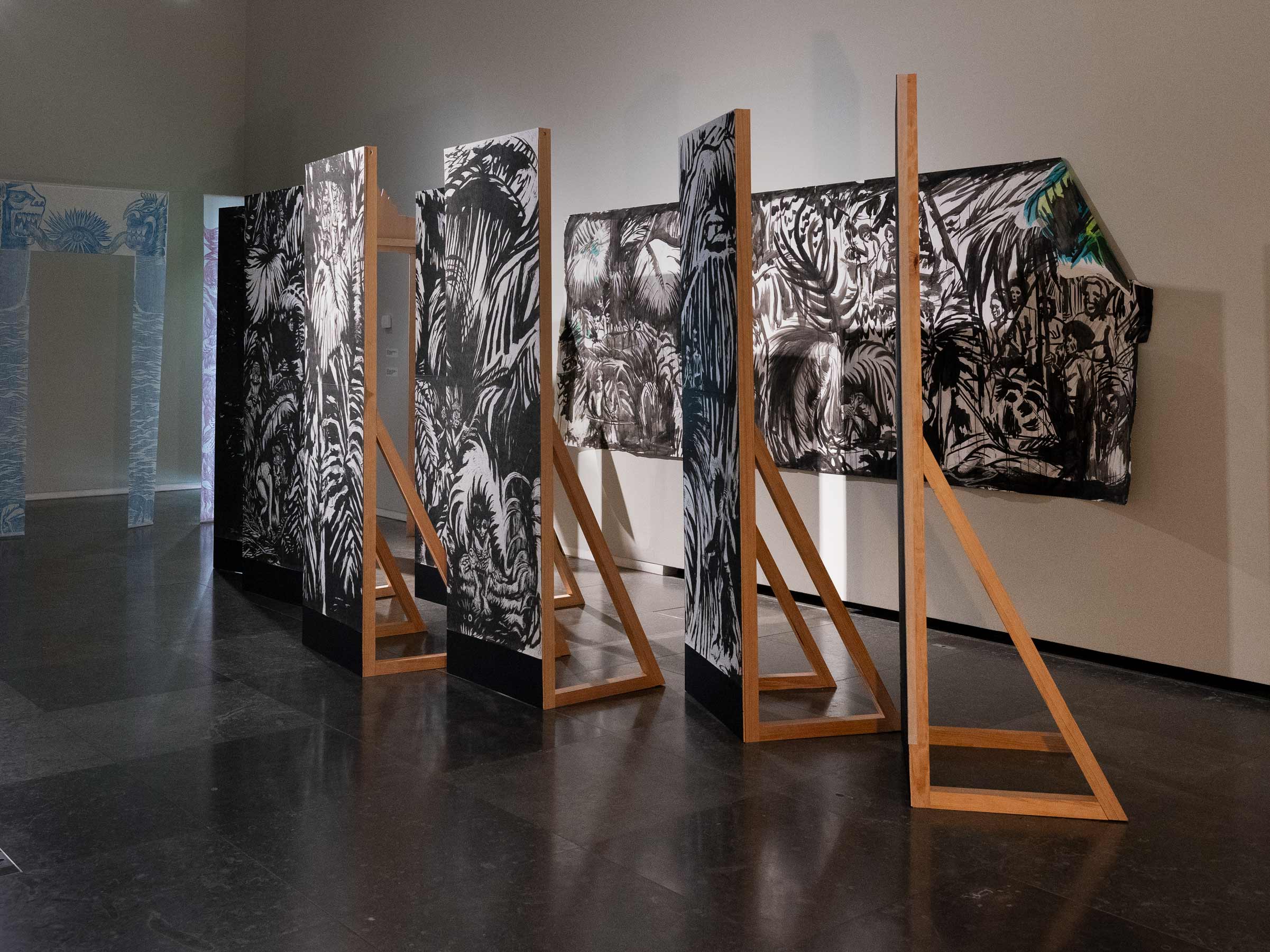
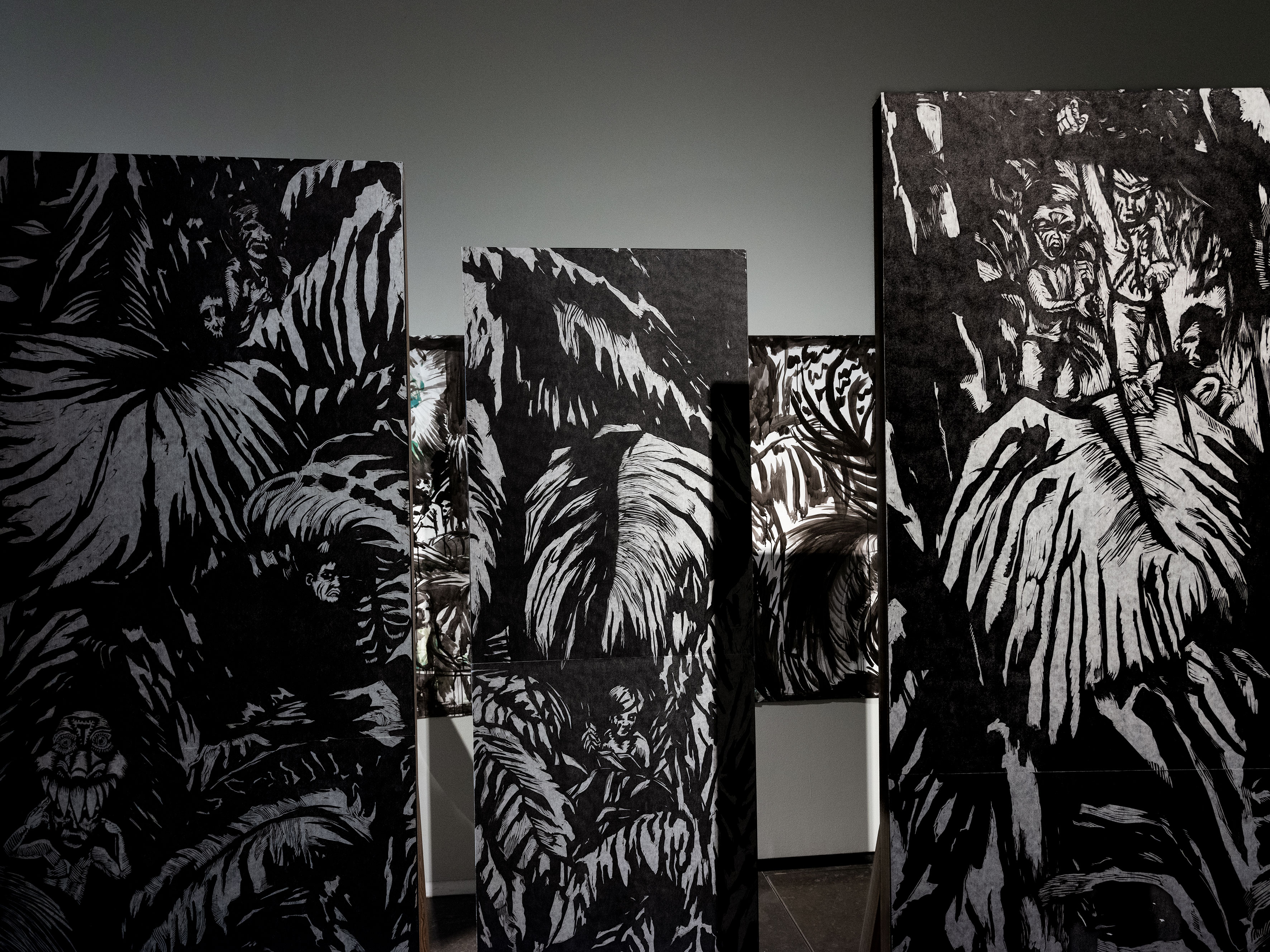
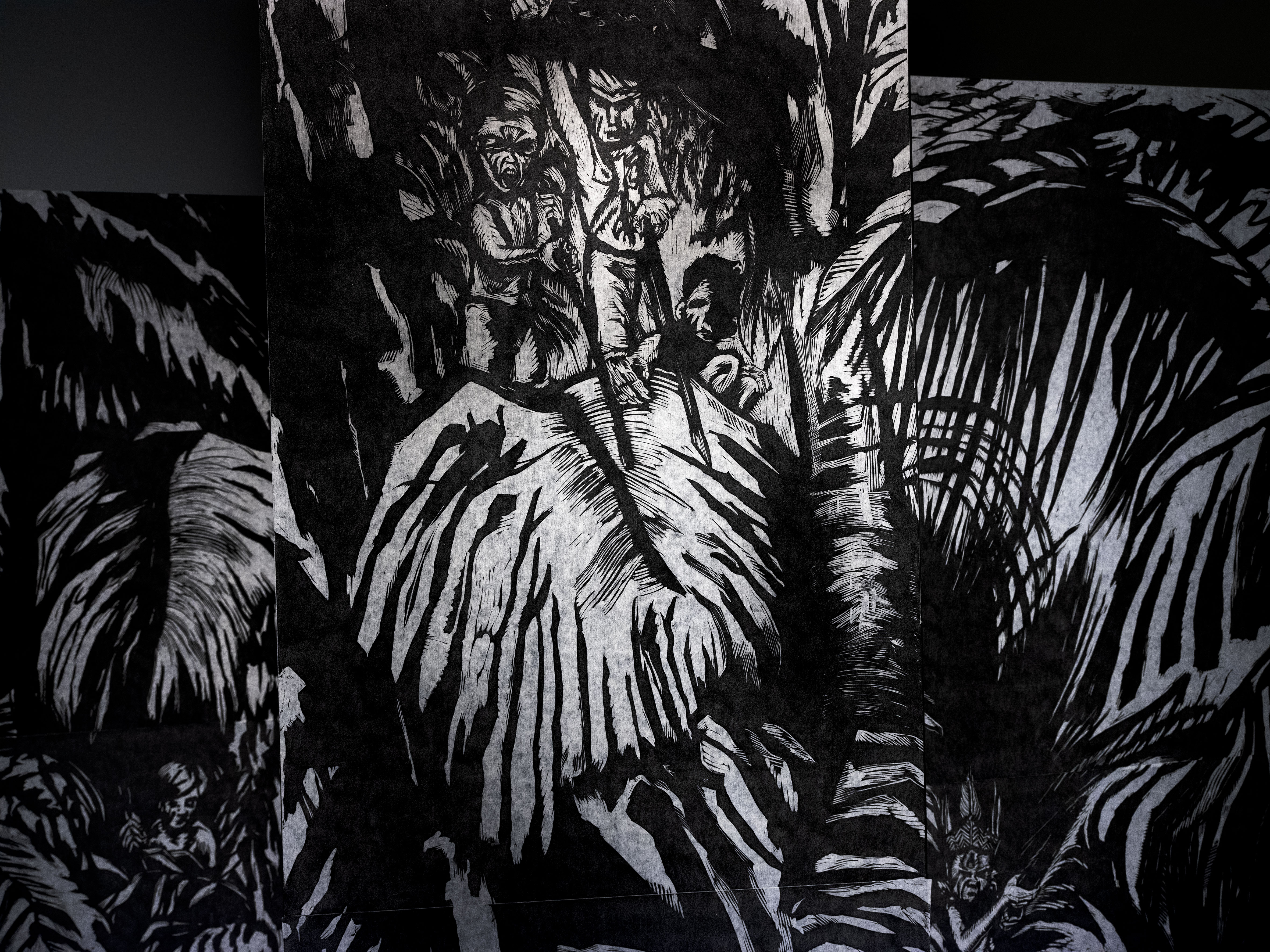
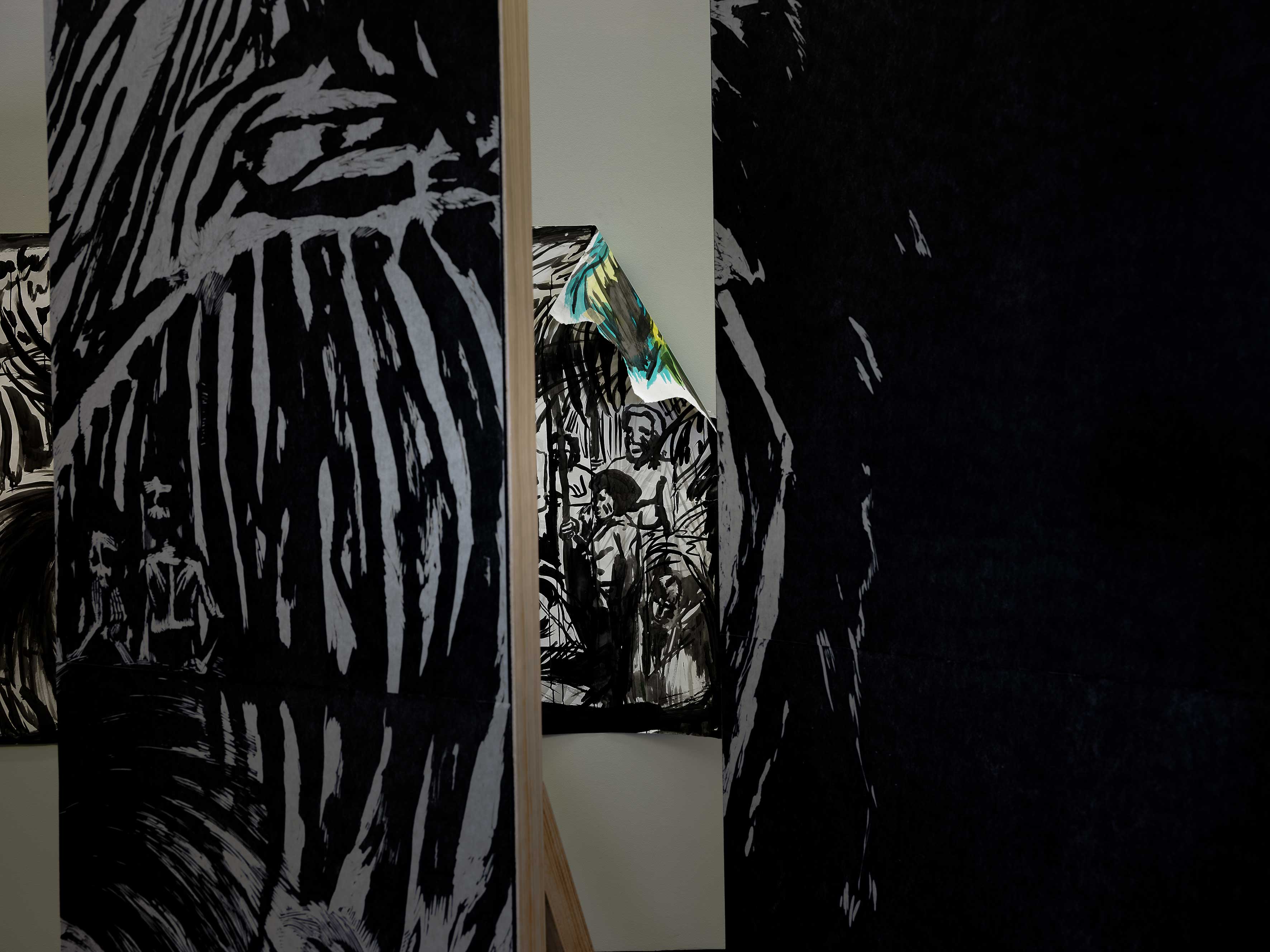
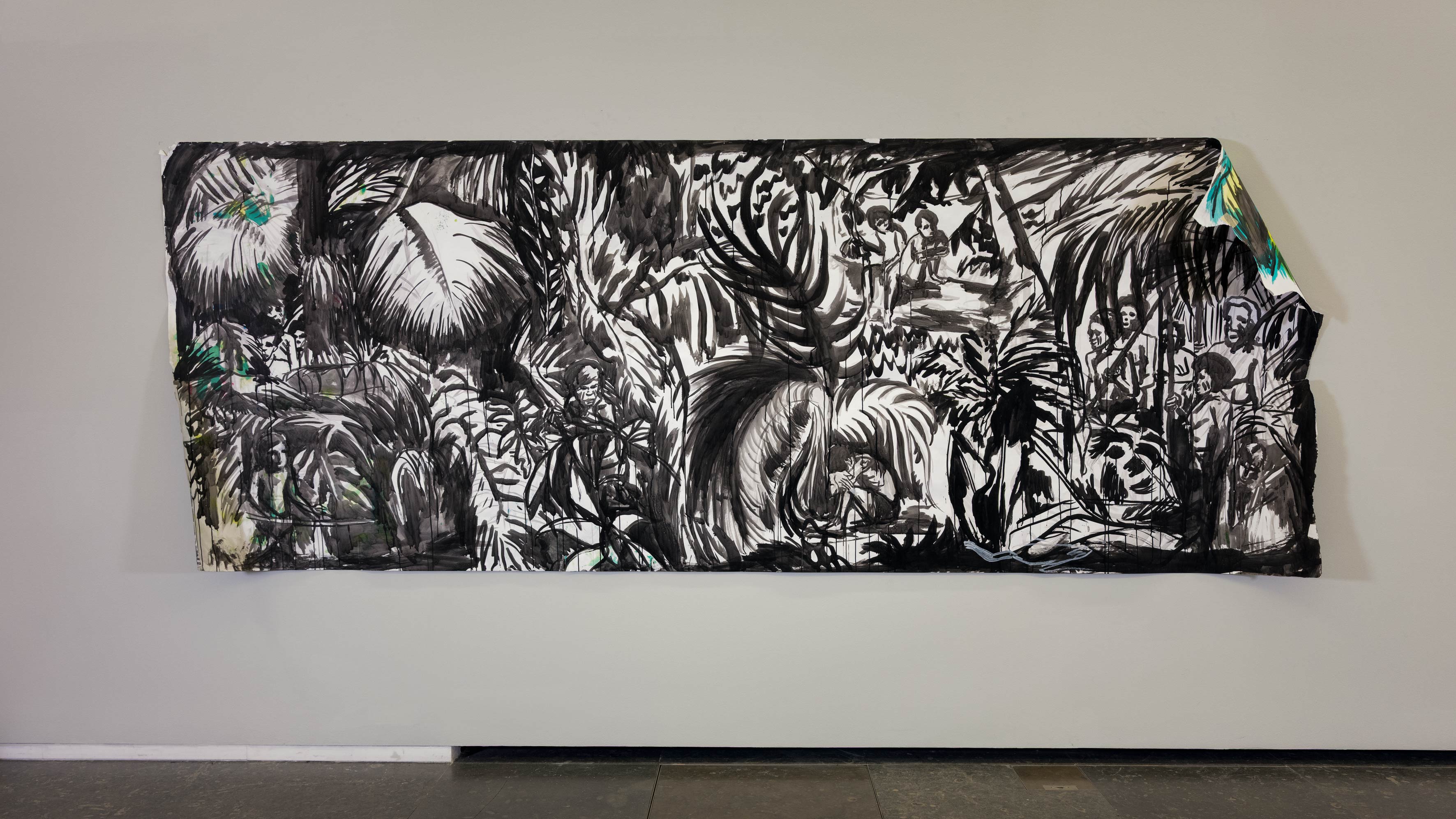
"why do you wide in the black bushes "
installation linocut; drawing in Indian ink, eccoline250cm x 122,5cm (Un.)
casa das histórias paula rego | cascais 2025
photo by ricardo pesqueira e valter vinagre
![]()
![]()
![]()
![]()
![]()
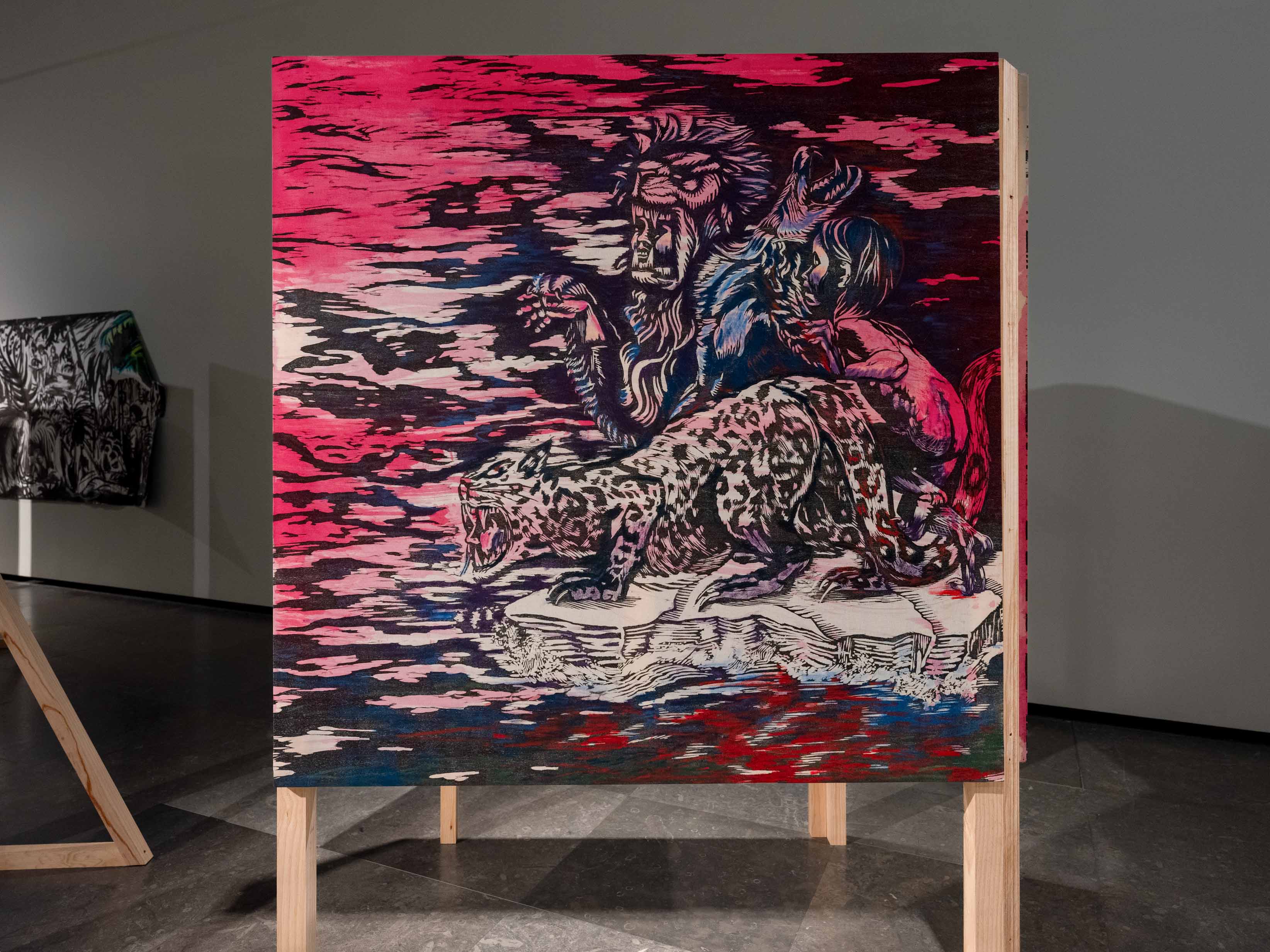
"beasts and furies”
installation; woodcut, cement 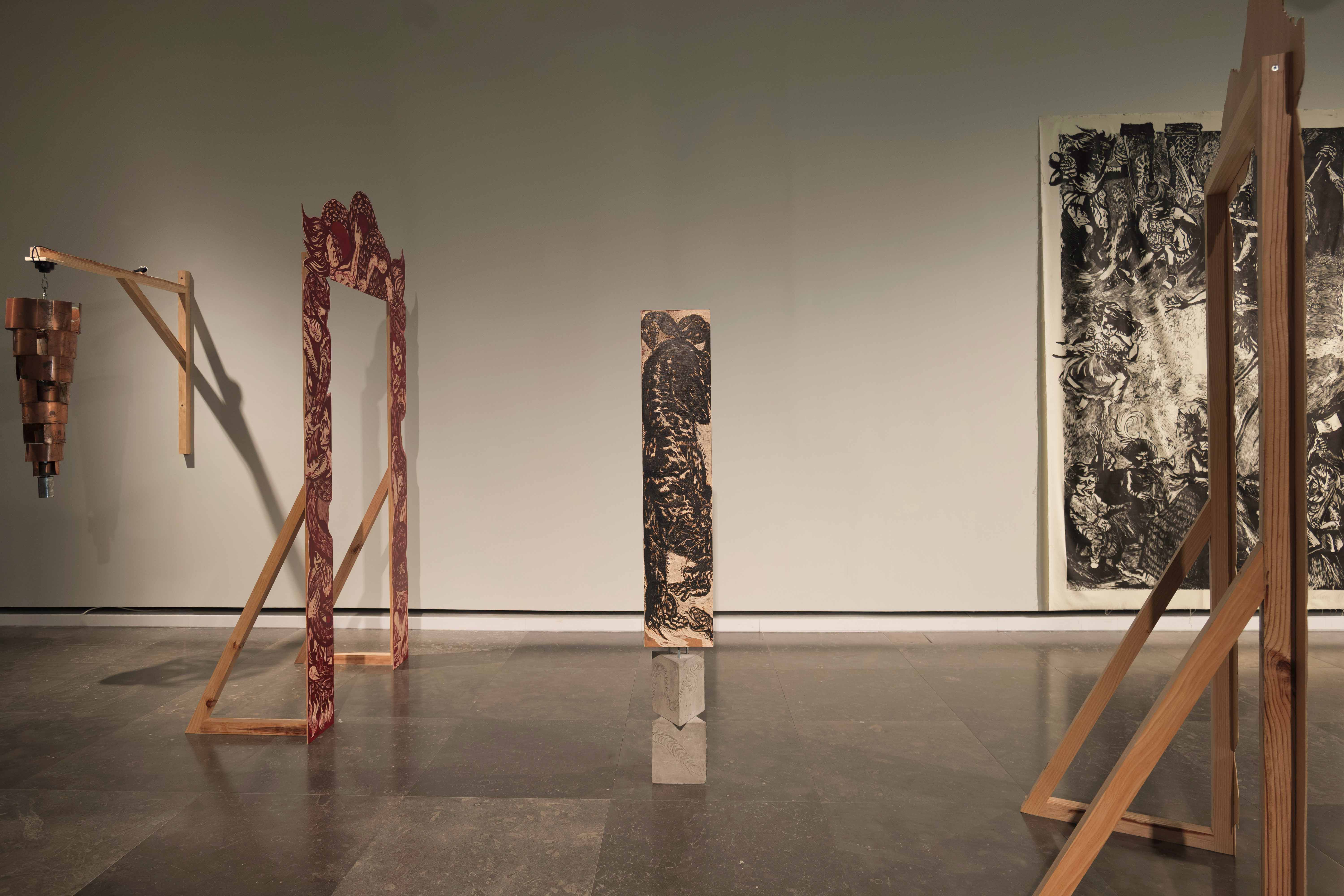
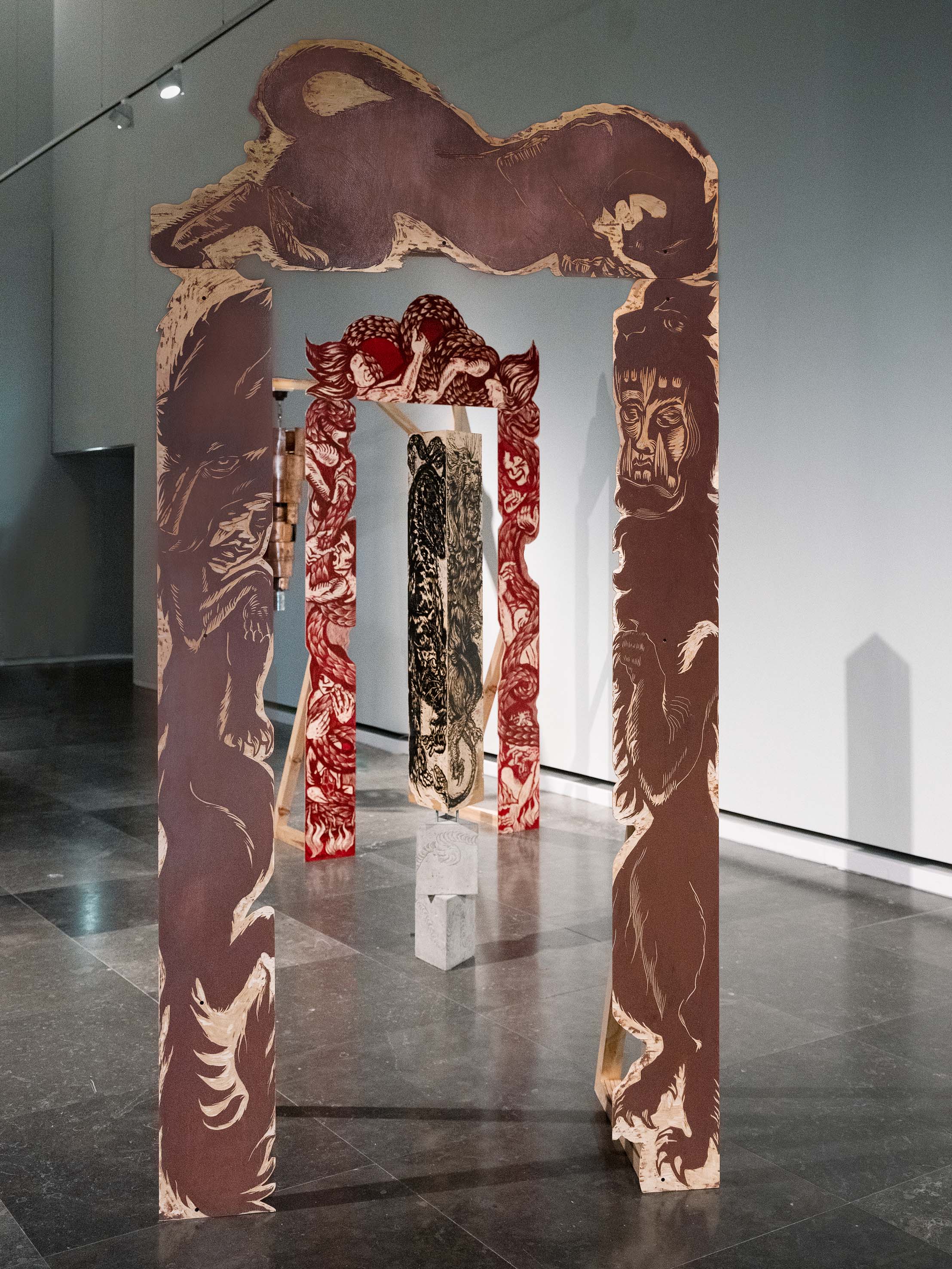
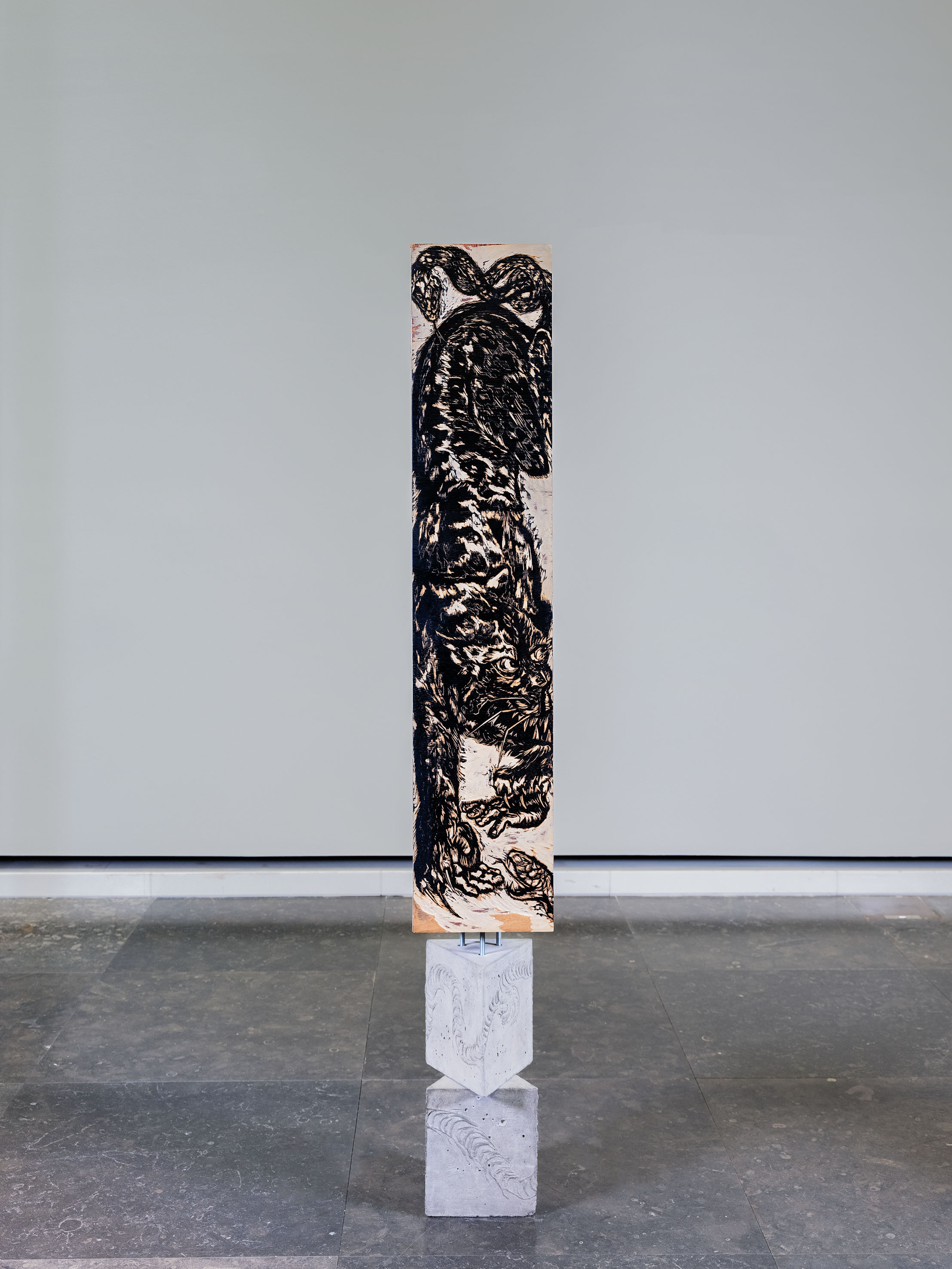
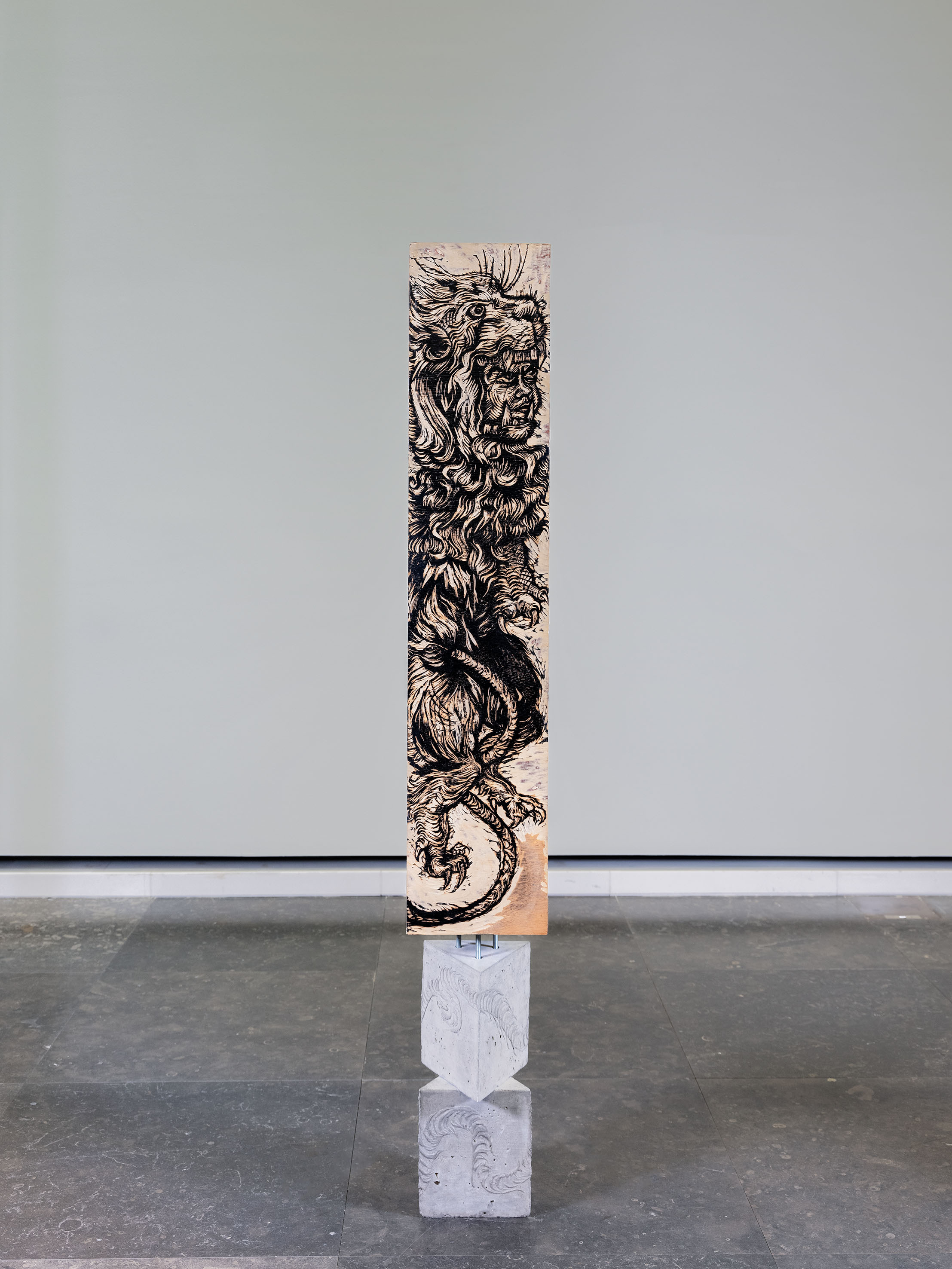
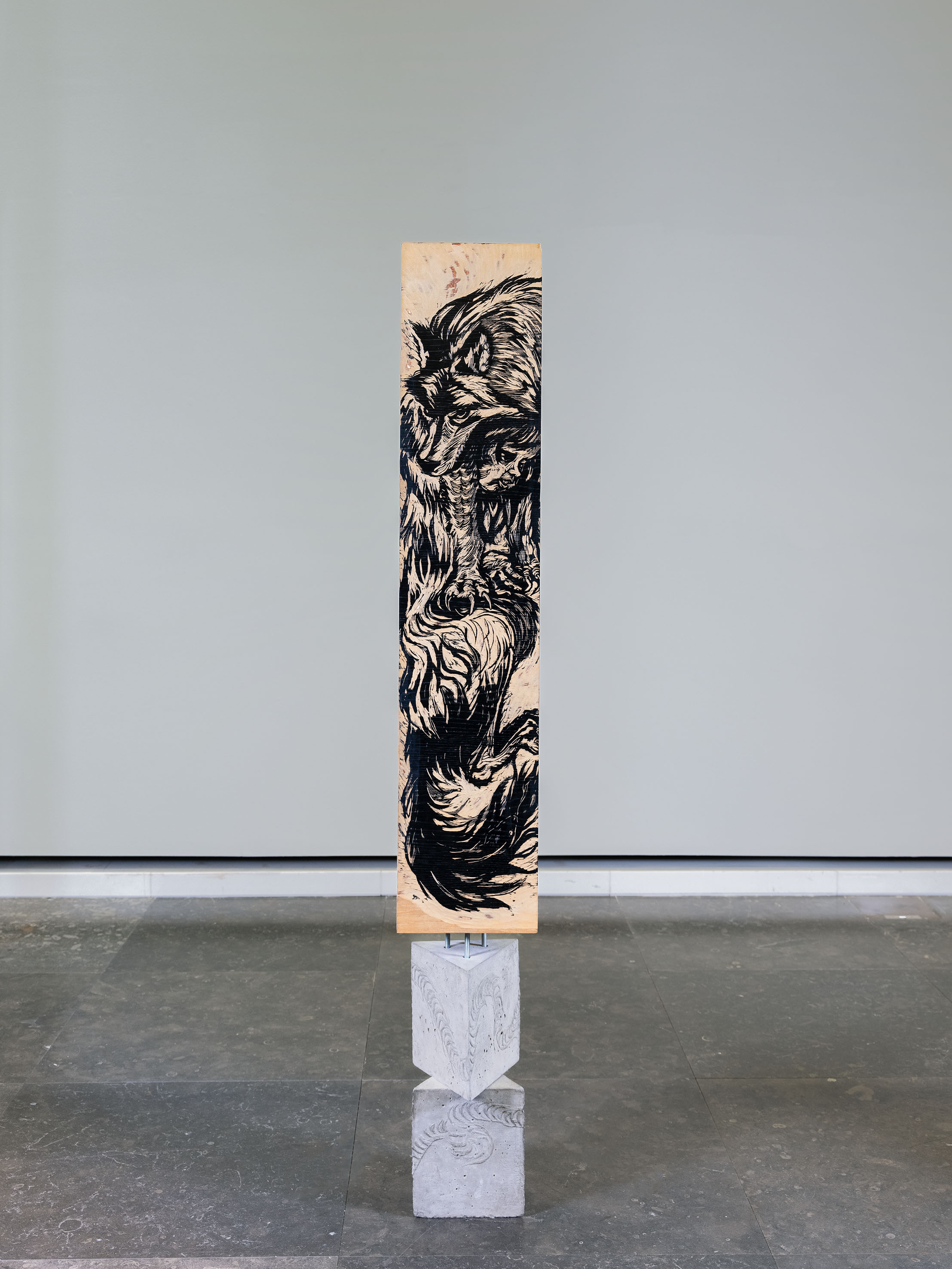
250cm x 122,5cm
casa das histórias paula rego | cascais 2025
photo by ricardo pesqueira and valter vinagre
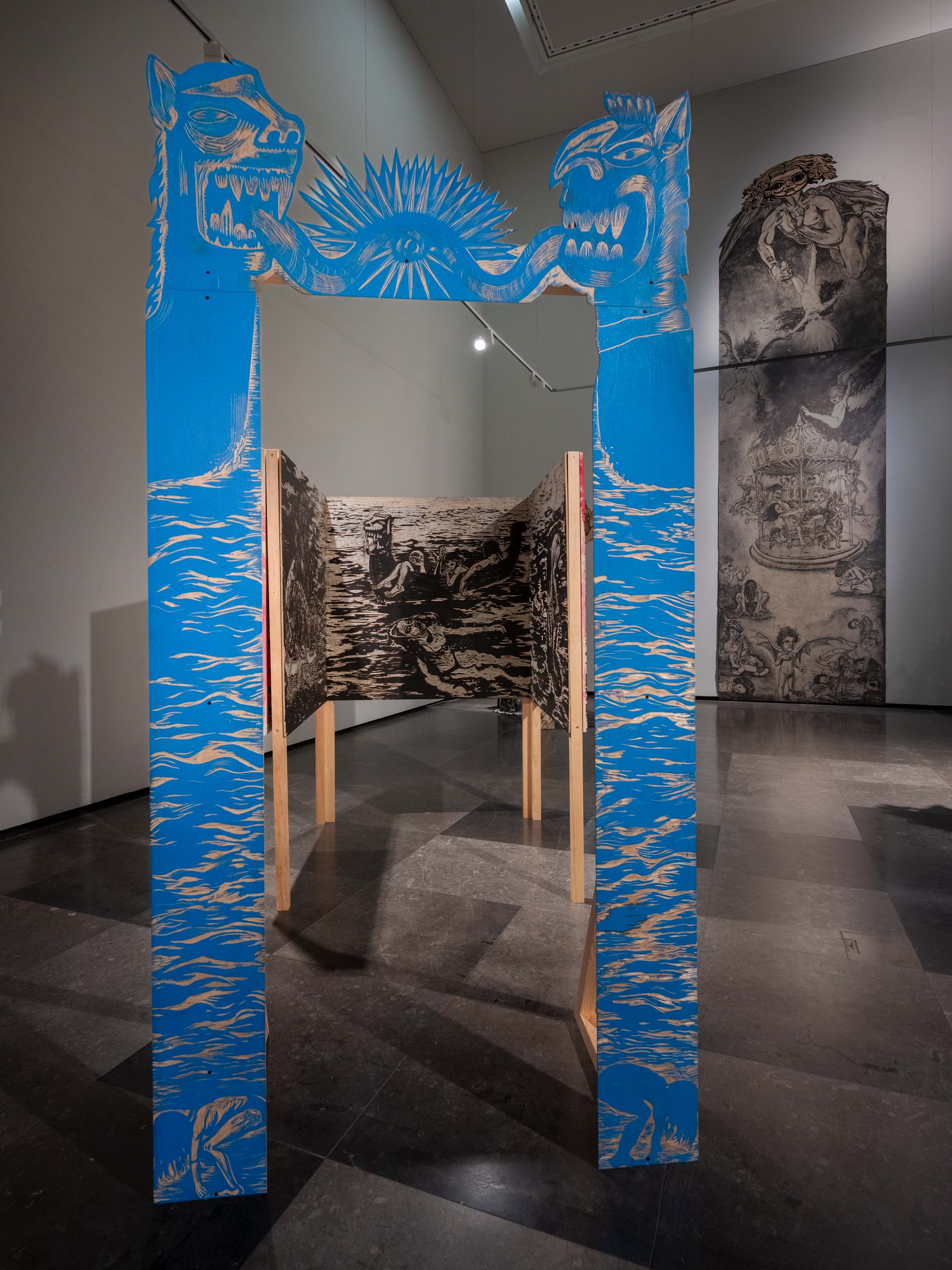
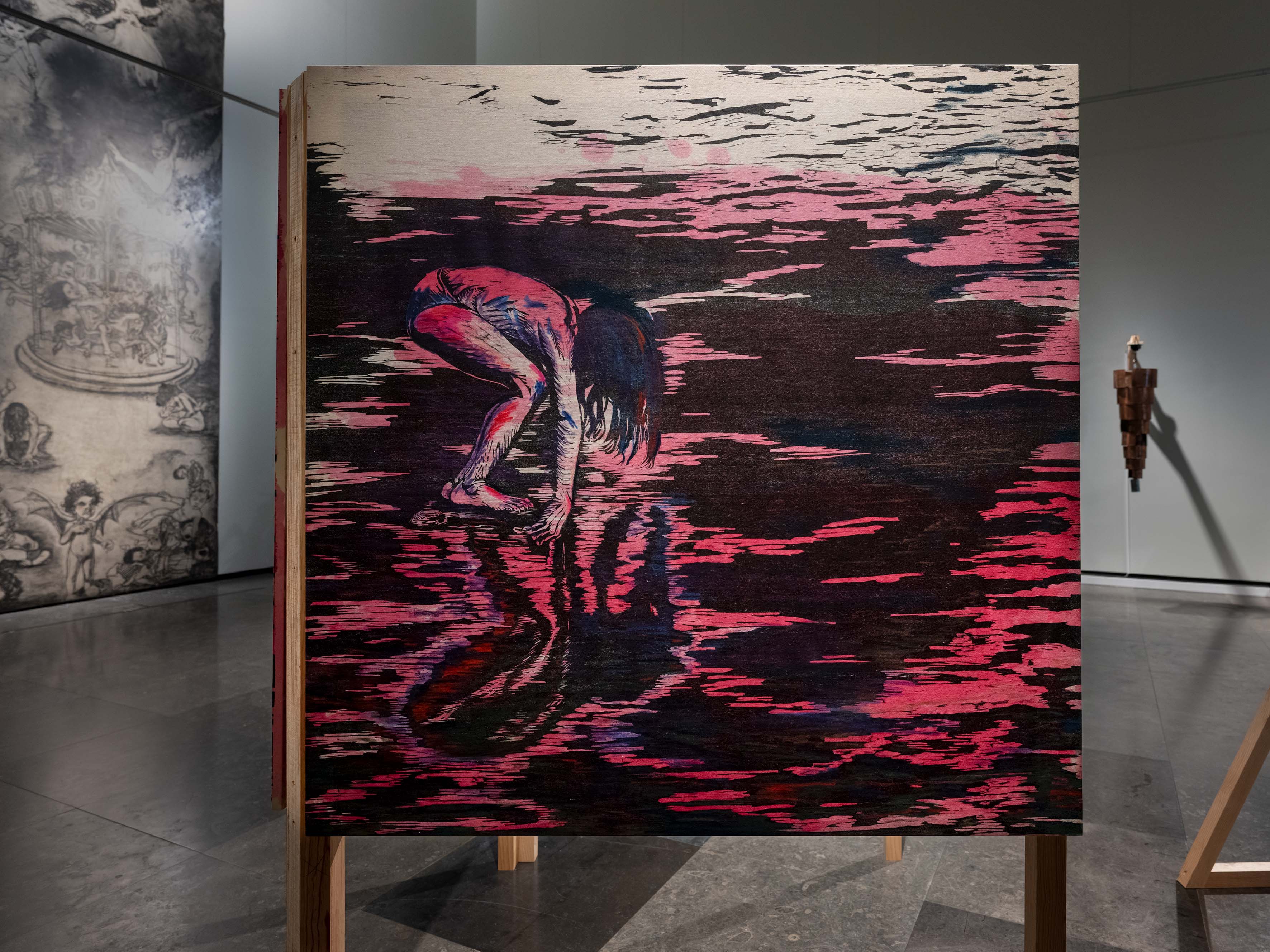
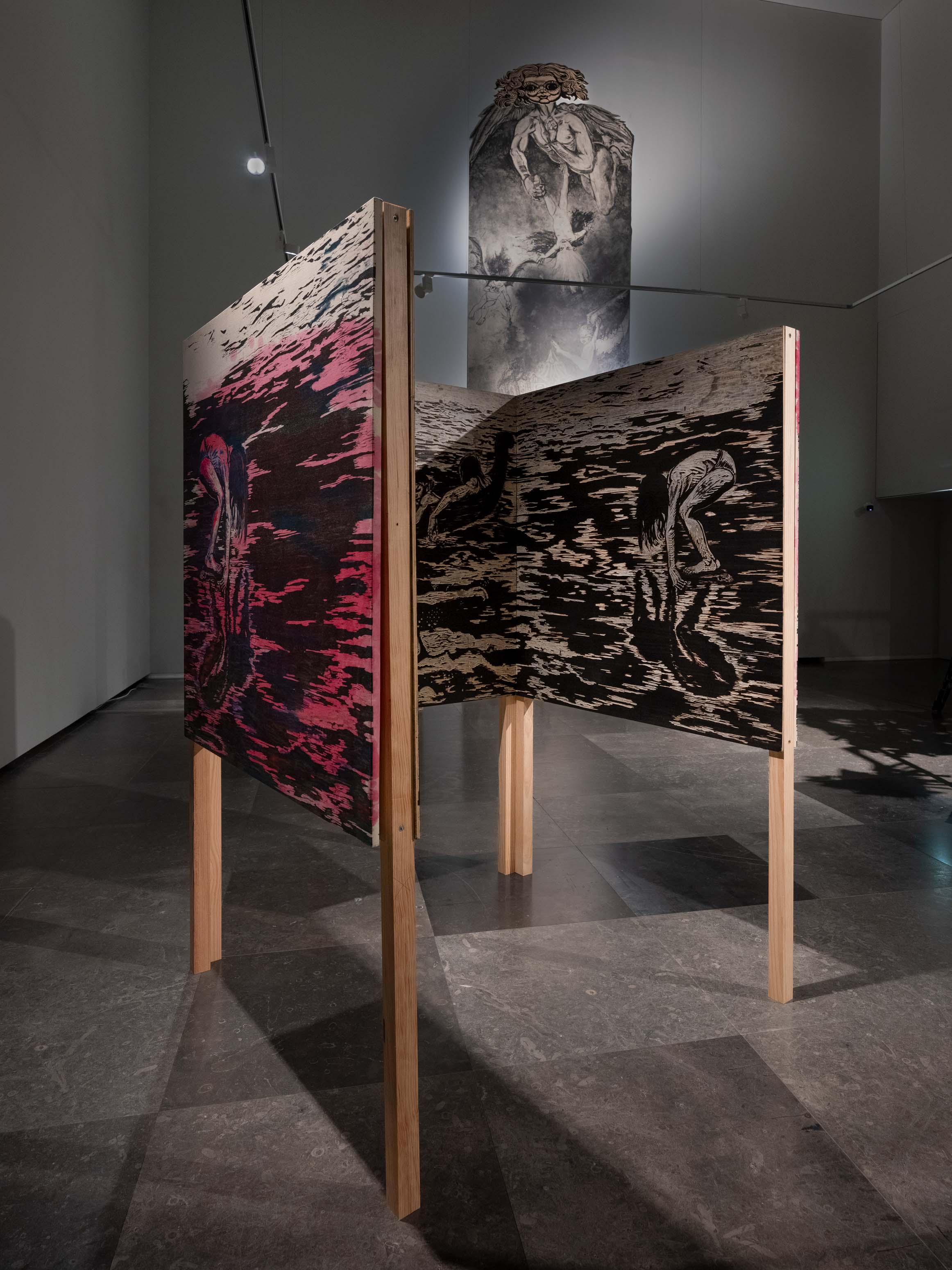
“we, daughters of the mud”
installation; woodcut, printed on fabric and overpainted with acrylics
Overall dimensions: 500 × 125 cm
(4 panels, each 125 × 125 cm)
casa das histórias paula rego | cascais 2025
photo by ricardo pesqueira
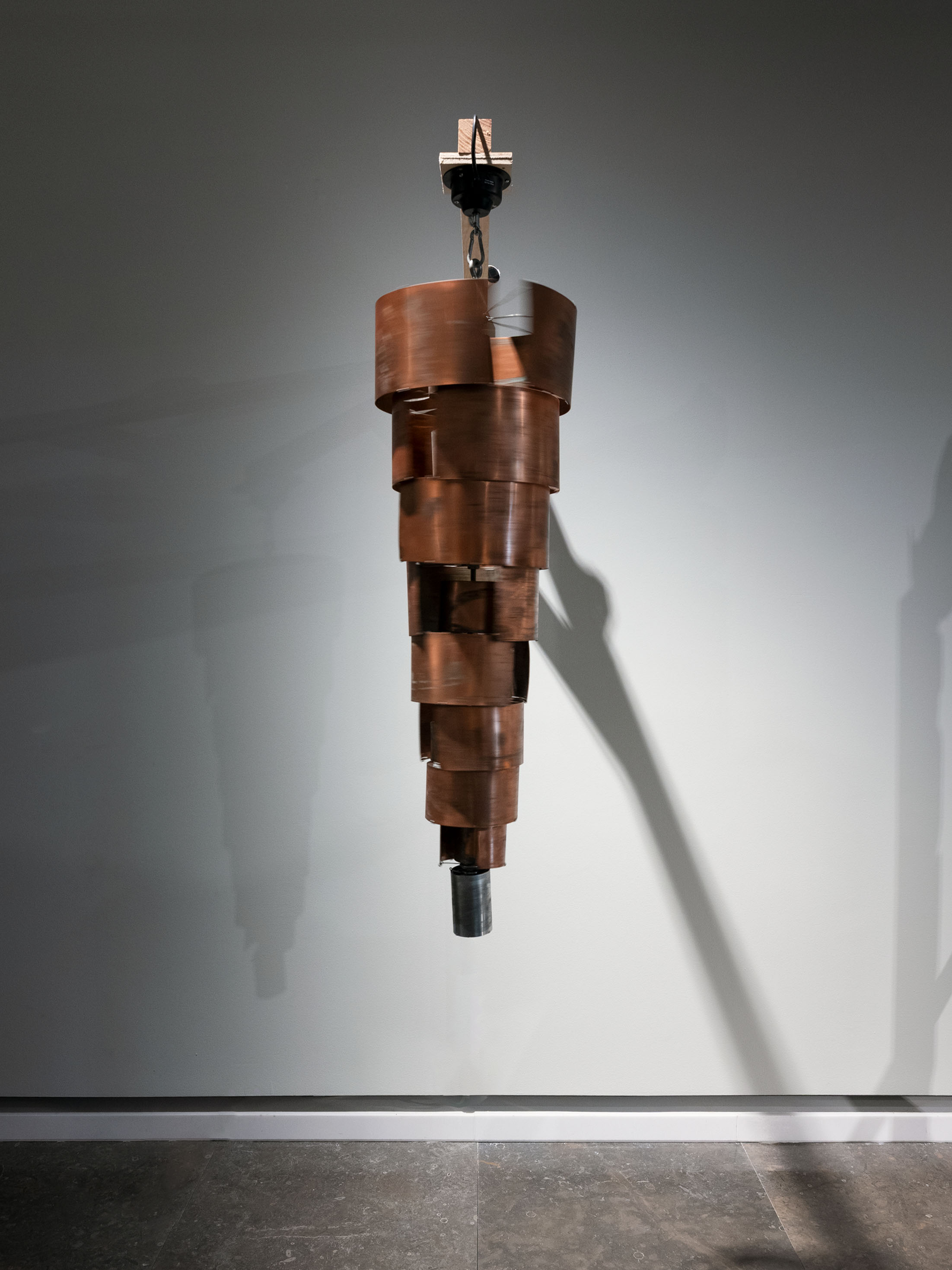
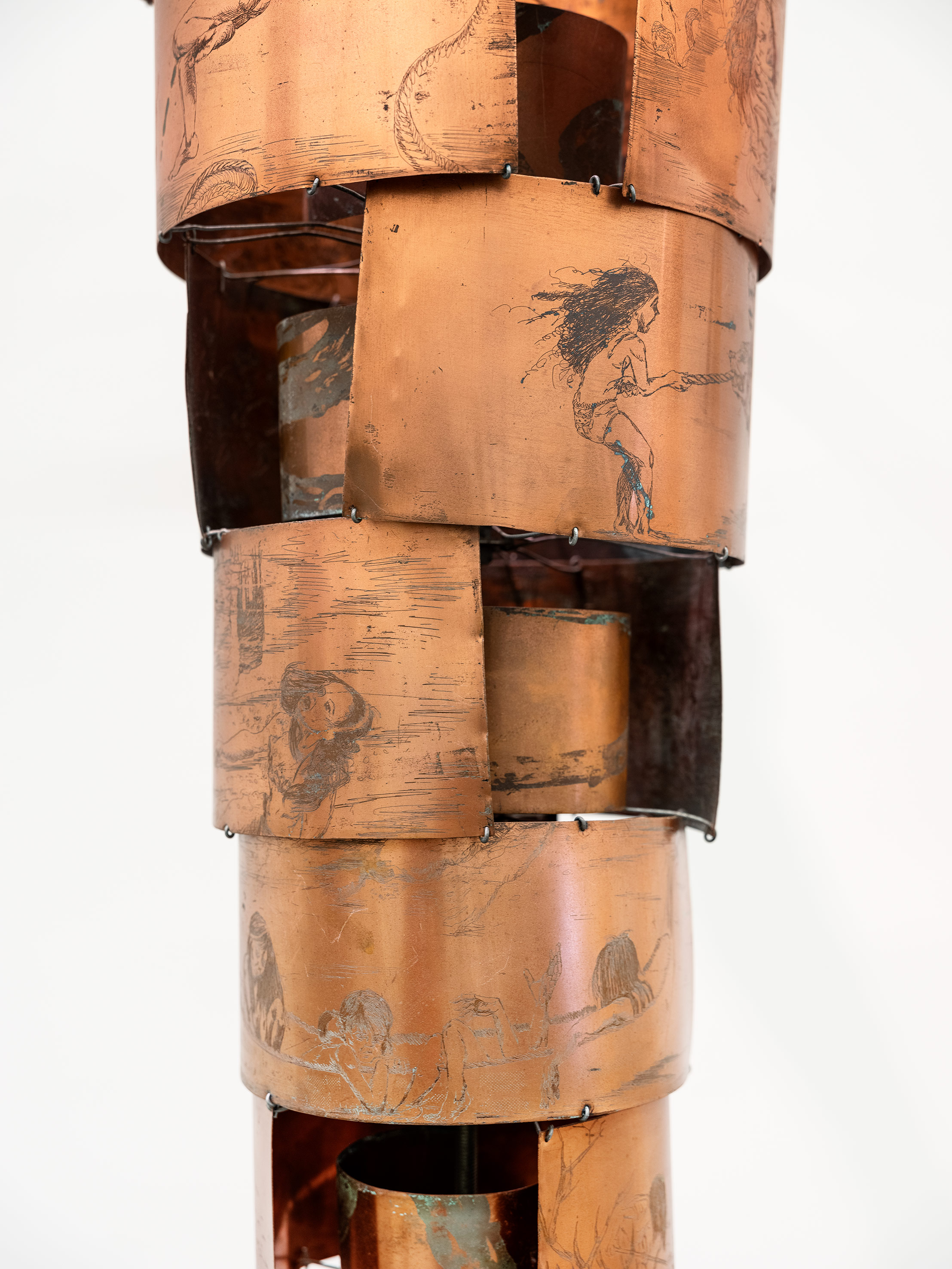
“journey to the center of the earth”
installation; etched copper/zinc matrix, threaded rod, motor
100 × 32 cm
casa das histórias paula rego | cascais 2025
photos by ricardo pesqueira and valter vinagre
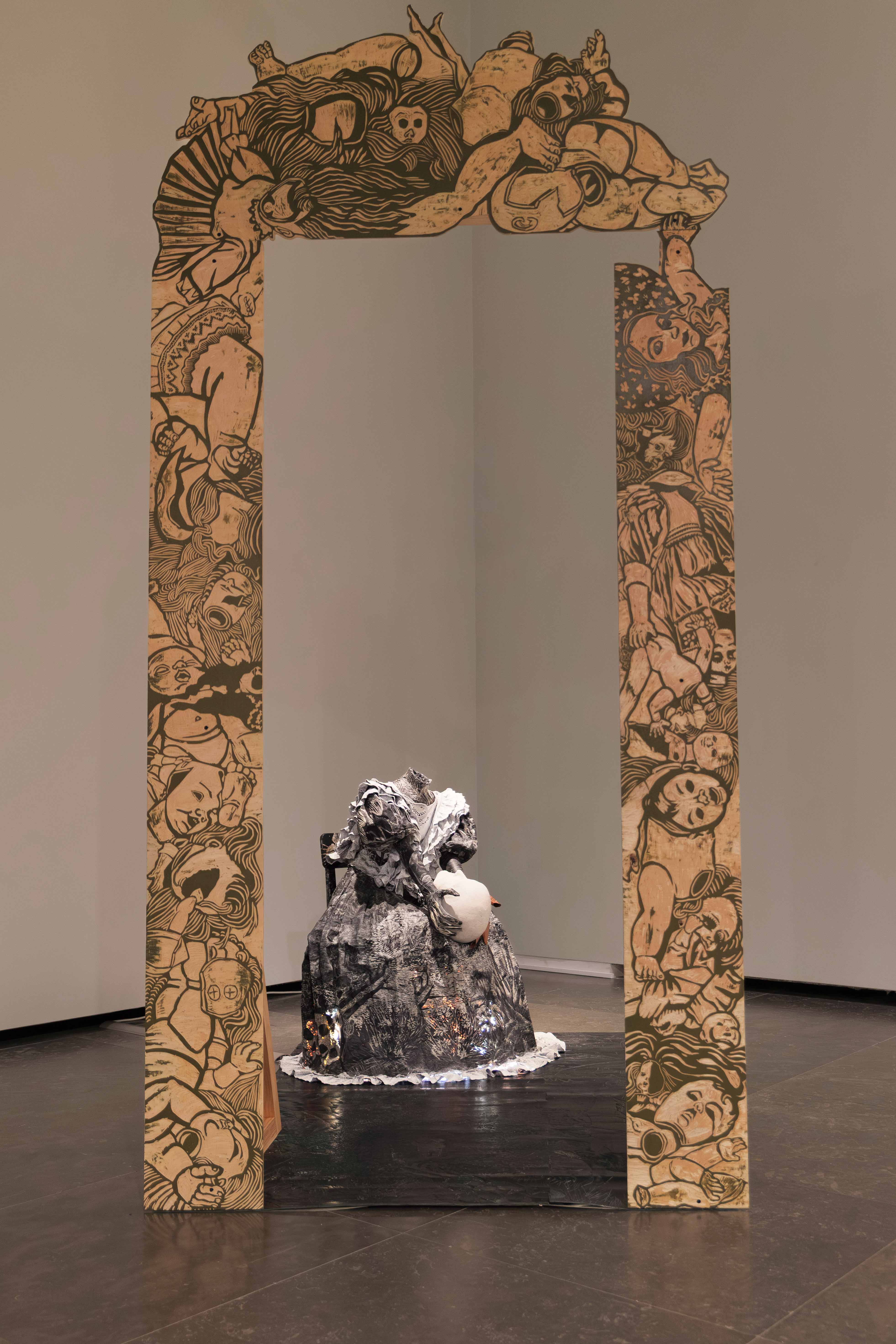
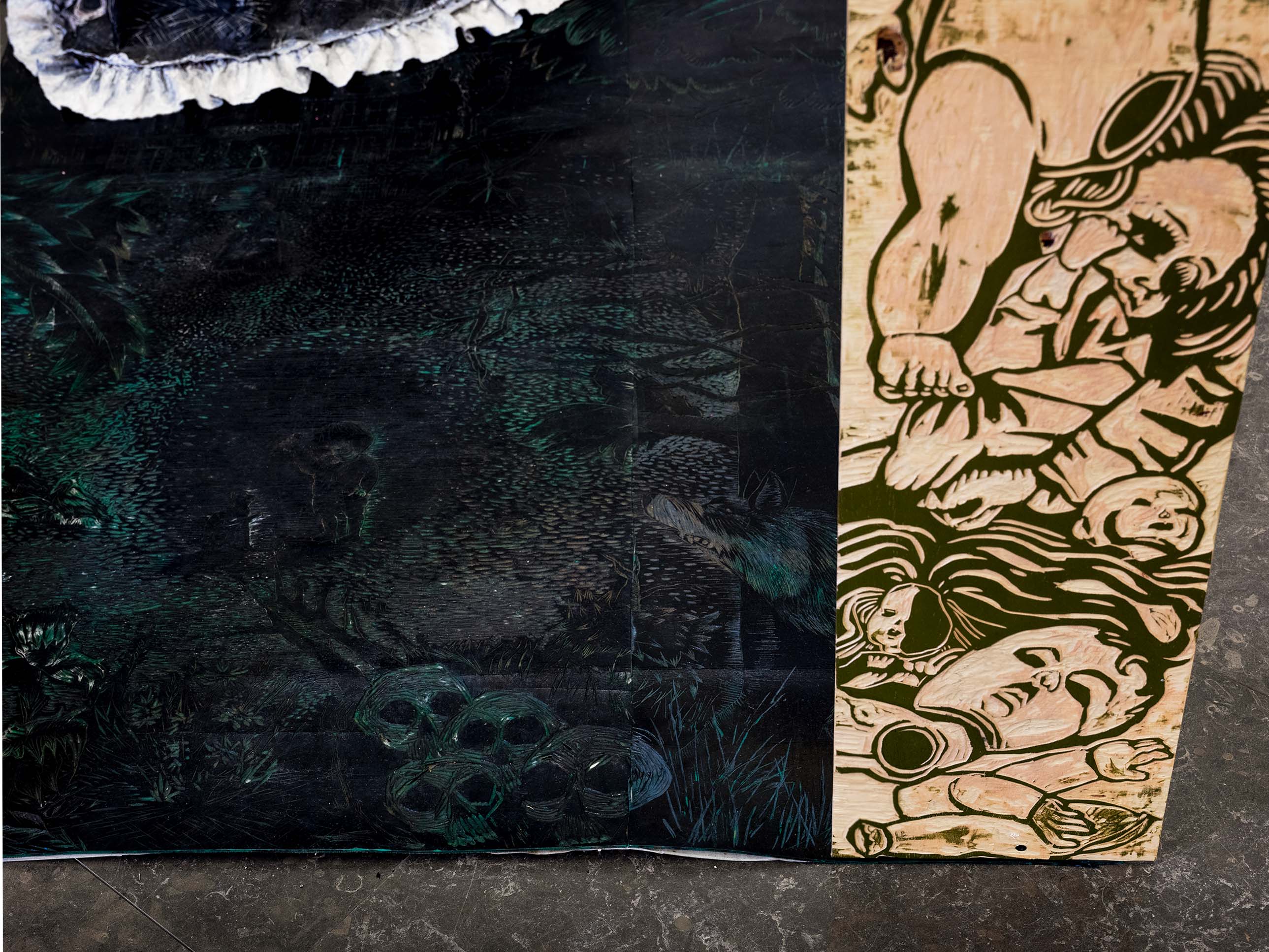
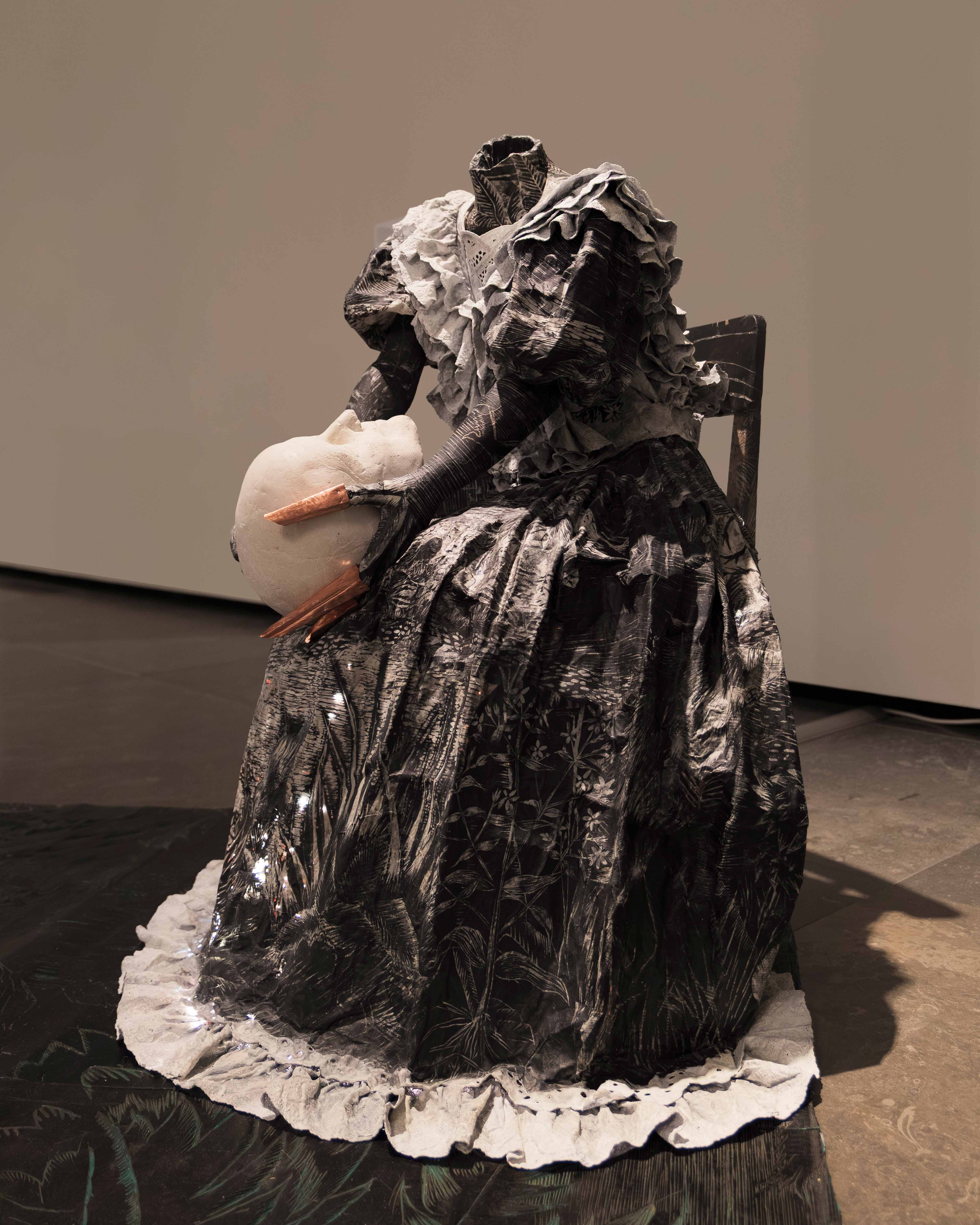
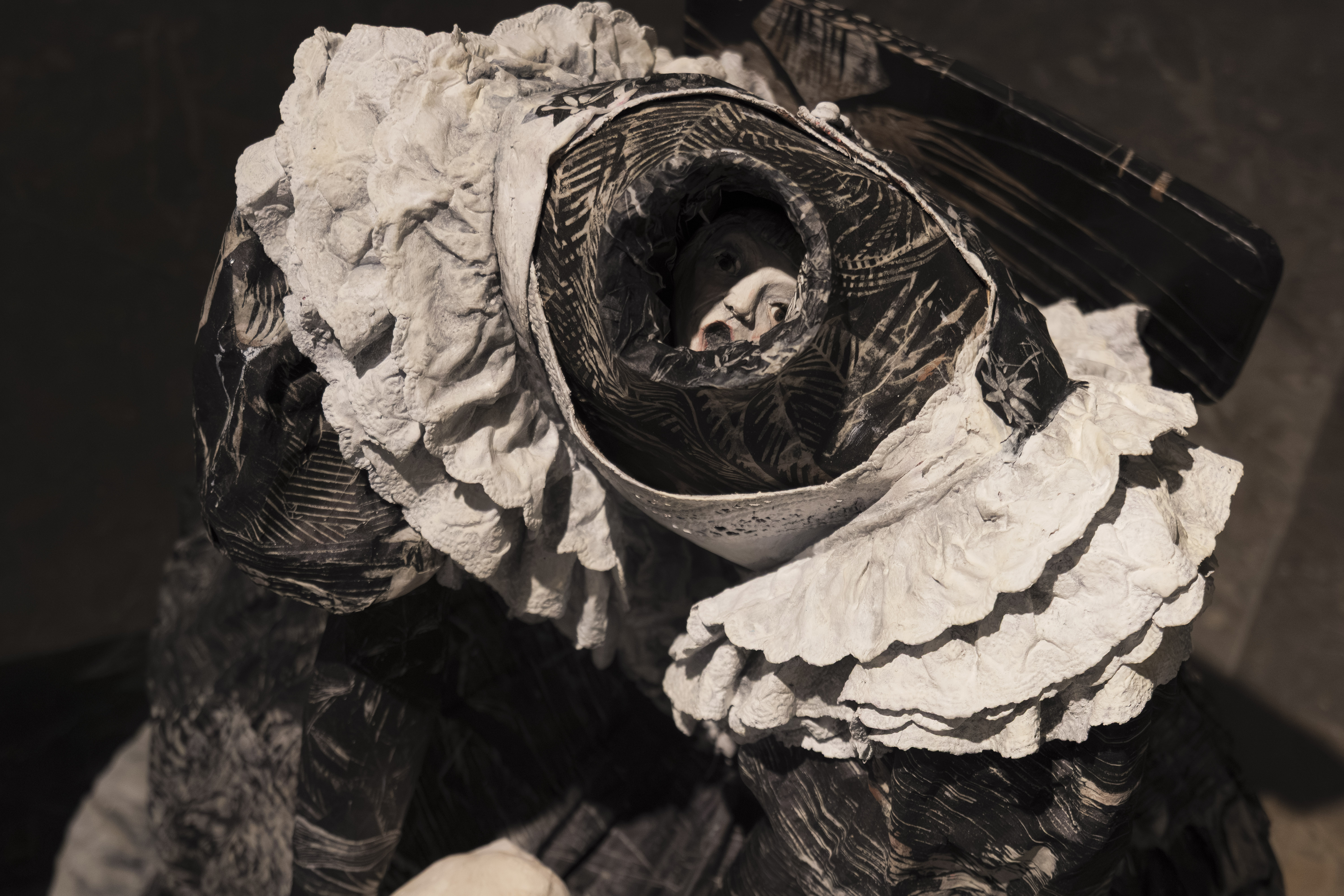
“posthumous memories II”
installation; linoprint matrix and prints, intaglio matrices, textiles, wood, resin, and plaster
120 × 95 × 60 cm
casa das histórias paula rego| cascais 2025
photos by ricardo pesqueira and valter vinagre
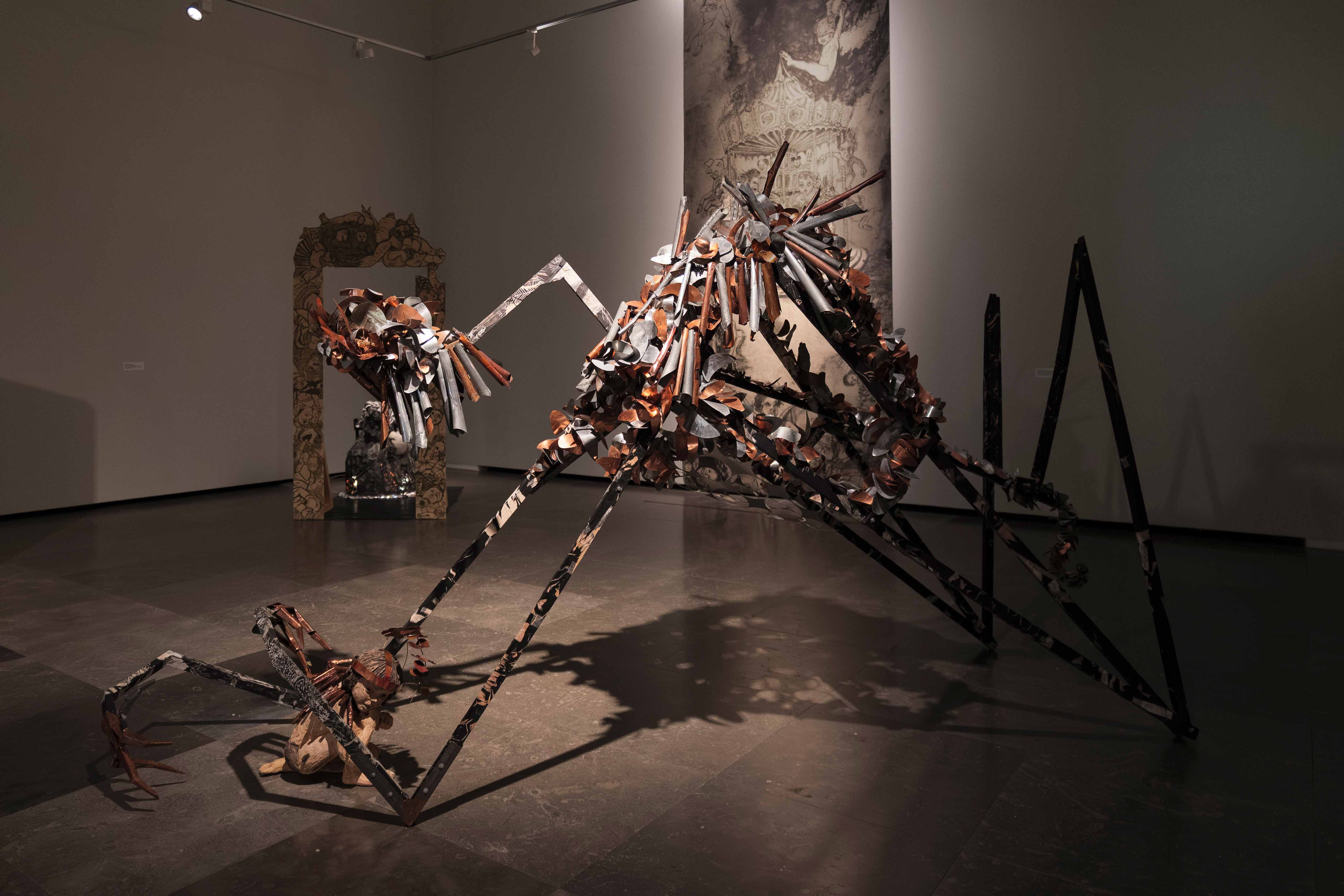
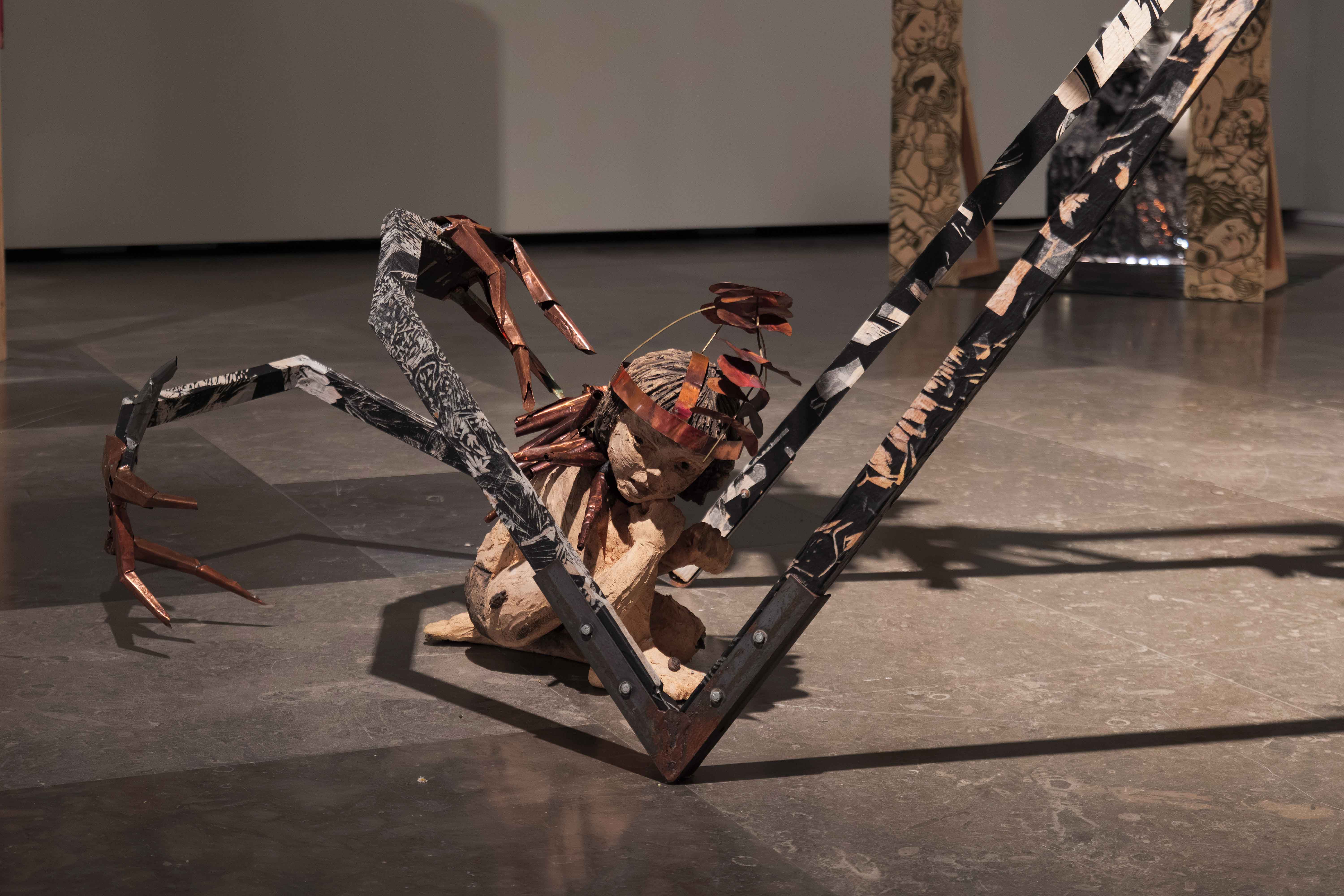
“vexilla regis produent inferni”
installation; etched copper/zinc matrix, wood, ceramics
casa das histórias paula rego| cascais 2025
photos by ricardo pesqueira
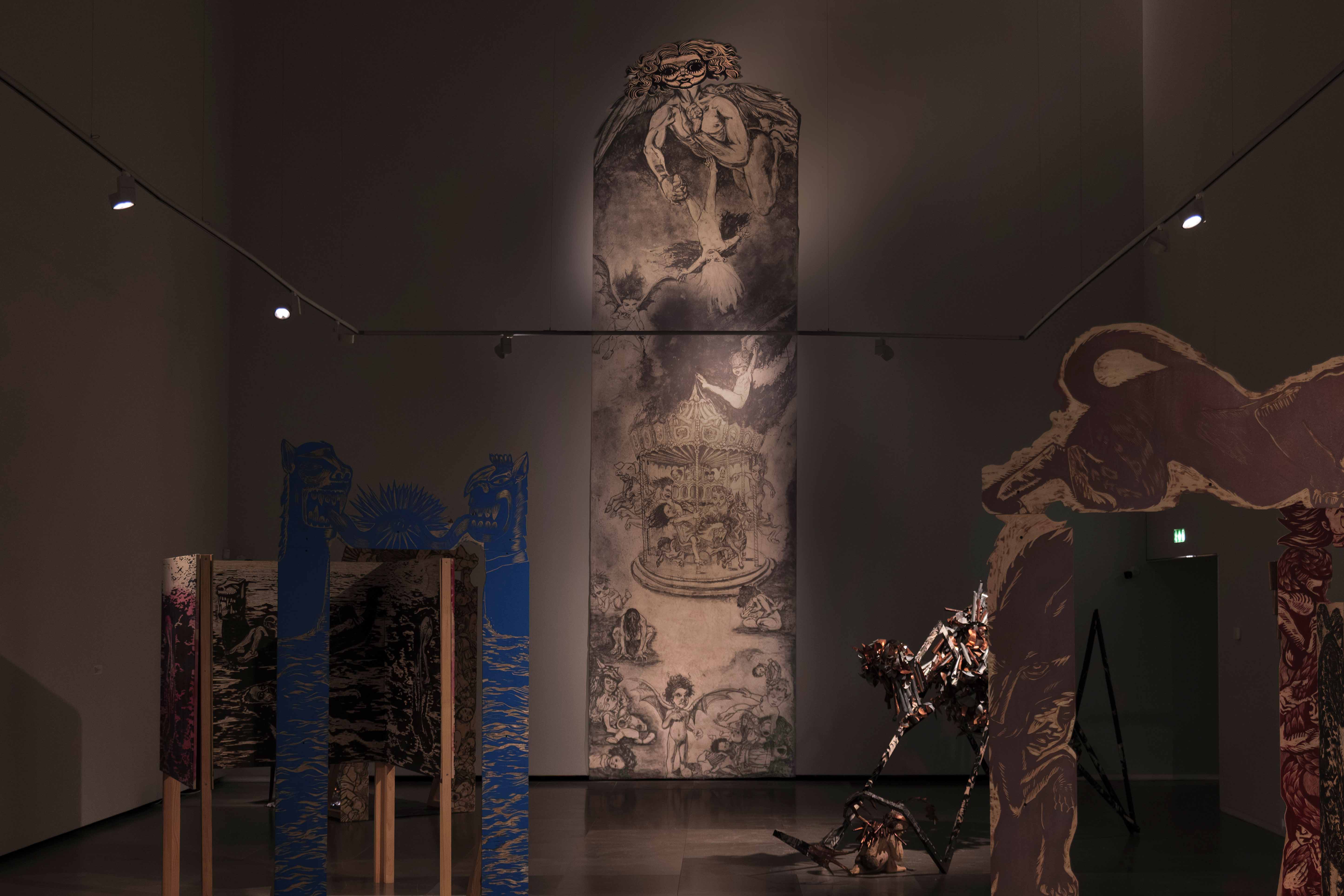
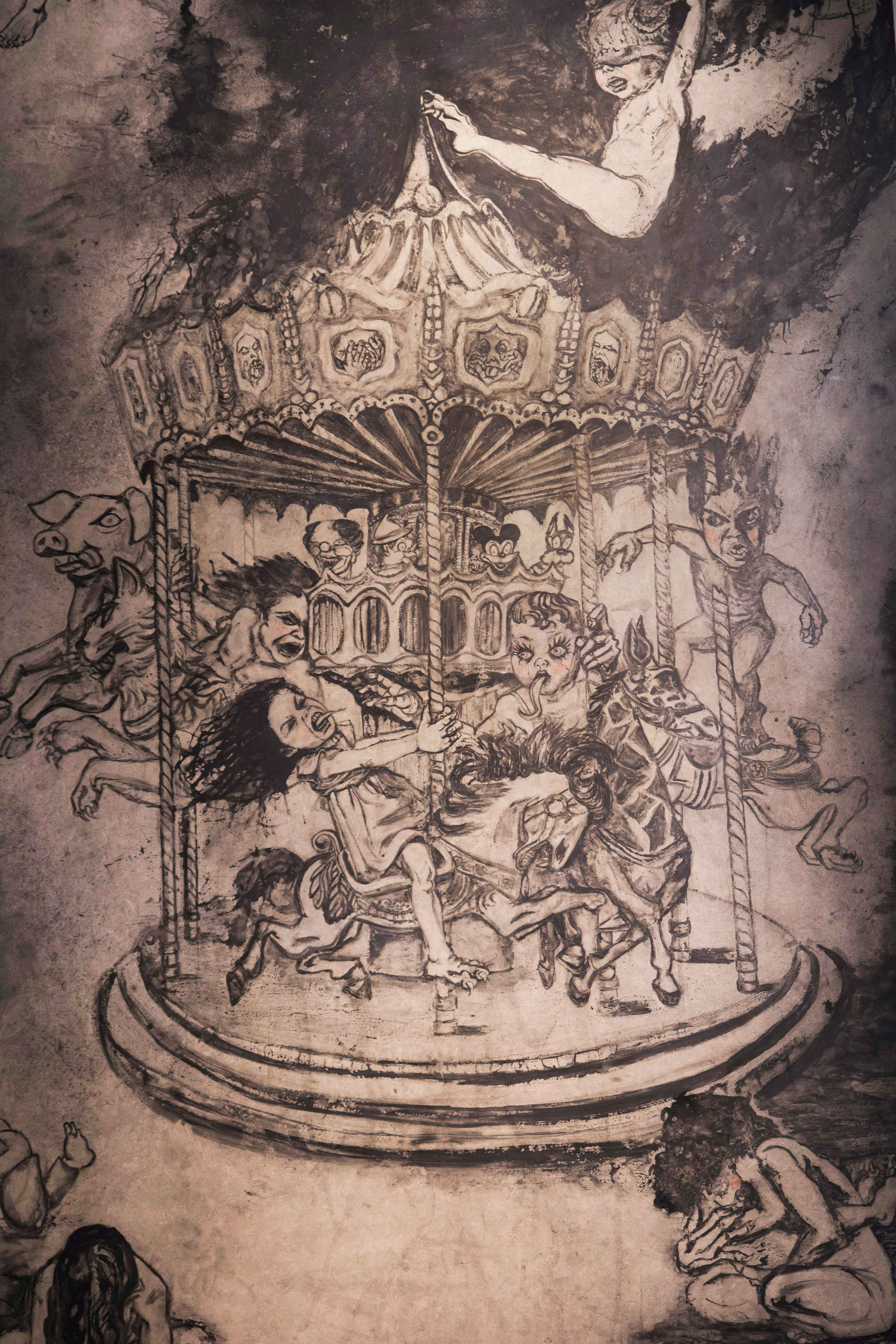
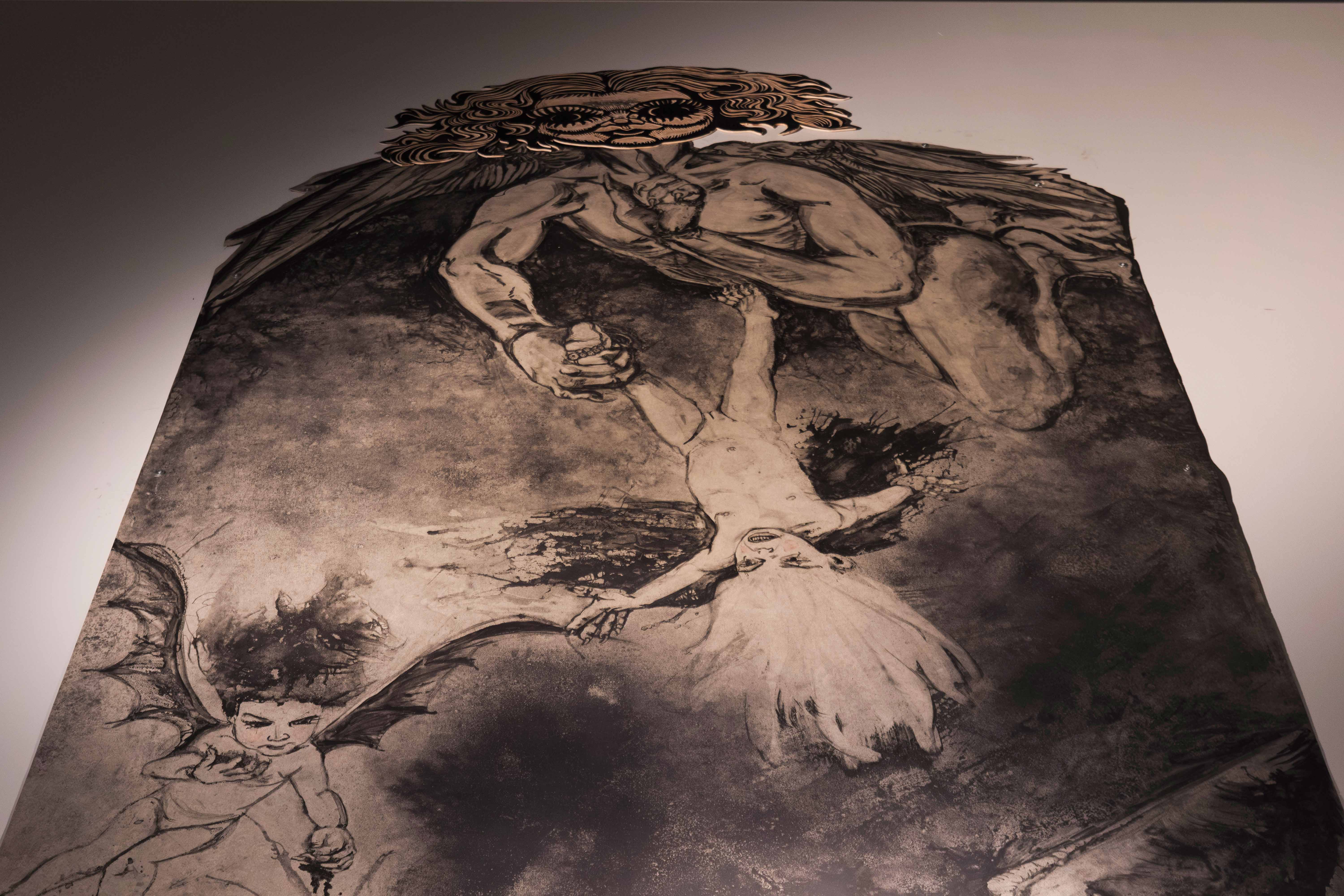
“bellum omnium contra omnes”
drawing; varied graphite on linoleum
casa das histórias paula rego| cascais 2025
photos by ricardo pesqueira and valter vinagre
The exhibition The Inferno Is Others, featuring works by the artist Ana Torrie (Porto, 1982), is part of the cycle of temporary exhibitions in Room 0 of the Casa das Histórias Paula Rego, which seeks to connect the Museum’s Collection with contemporary artistic production. In these exhibitions, we present works that intersect with Paula Rego’s universe, both in terms of figuration and narrative content.
Using the metaphor of the amusement park as a recreational space—offering freedom, escape from reality, sensory experiences, and intense emotions—Ana Torrie presents her works as visual attractions within a labyrinth of multiple choices, inviting the viewer to pass through various portals leading to her pieces. Laden with meanings that echo the symbolism of the works they frame, the portals transport us to a unique universe where children are the protagonists, revealing their wild and brutal side, as well as their subversive potential, in a tension that constantly oscillates between innocence and ferocity.
The allegory of the circles of Hell described in Dante Alighieri’s Divine Comedy serves as the main reference for the exhibition’s narrative and figurative construction, creating a symbolic space where pleasure, freedom, anguish, and chaos coexist. Beasts and Furies and the installation composed of We, Daughters of the Mud and Where the Grass Murmurs directly evoke symbolic figures from Virgil’s guided journey through Hell. Torrie finds this theme irresistibly compelling—much like other artists who have illustrated the 14th-century poem, such as Gustave Doré—but her approach is distinguished by its intimate discourse. In her visual and narrative fictions, the real and the unreal converge through the depiction of sub-worlds in which childhood imagination is always the reference point, intersecting with the dramas of the contemporary world.
Struggles for power, equality, and freedom, as well as fear, suffering, decline, and the destruction of the world as we know it, are explored with intricate graphic acuity, particularly evident in the incisiveness of the drawings within the grooves of wood, linoleum, copper, and zinc matrices.
Her works demonstrate a profound material awareness. Torrie understands the properties of the materials she uses and recognizes the importance of research and artistic experimentation as central practices in the creative process, challenging traditional printmaking conventions. This reflective dimension is especially apparent when she displays her large-scale matrices (wood, linoleum) as central pieces and true graphic sculptures—living bodies whose textures reveal the engraving process as a performative act capable of expressing marks, history, and the emotion of creation. Her works gain complexity when presented in different contexts (interior or exterior; institutional or informal), constantly metamorphosing from simple graphic installations into sculptural dimensions, sometimes accompanied by a sound component, as in Where the Grass Murmurs and We, Daughters of the Mud.
Societal dramas are thus represented through a process of constant transformation, in which the material itself tells a story of unpredictability, change, and adaptation. These closely originated stories eventually interconnect, allowing for a shared narrative largely guided by the artist herself, represented with and through her characters, assuming an identity that is at once phantasmagorical and autobiographical, as in the installation Posthumous Memories.
The banner of Hell, represented in the work Vexilla Regis Prodeunt Inferni—a title taken from Canto XXXIV of Dante’s Inferno—directly prompts reflection on a theme central to the exhibition. The beast in metamorphosis, constructed from the copper and zinc matrices that form the basis of smaller prints and concealing the presence of a child, represents the infernal image of the Other, for evil is never within ourselves. The complexity of the human condition, with all its contradictions, is revealed through the emotions that arise from childhood: fears, anxieties, and anguish. And if Hell is other people—“L’enfer, c’est les autres,” the famous phrase by Sartre—there remains room for reflection on self-awareness through the gaze and judgment of others.
William Golding, author of the literary work Lord of the Flies, which is a recurring reference in Ana Torrie’s work, succinctly captured this existential unease that accompanies us from childhood: “The beast is not an animal on the loose; rather, it hides in the psyche of every child.”
catarina alfaro, 2025
photo by joão pint